Unidentified Anomalous Phenomena-From Sensationalism to Science
The NASA Panel's Investigations and Report
Joshua Semeter
Professor, Electrical and Computer Engineering
Boston University
Sponsored by PSW Science Member Michael Sandifer
About the Lecture

In 2017, the New York Times published a report featuring video footage captured by Navy aviators depicting airborne objects surrounded by a glowing aura that appeared to exhibit extraordinary flight characteristics, despite lacking any visible means of propulsion. The videos and pilot testimonies initiated a new wave of public and scientific interest in Unidentified Anomalous Phenomena (UAP). In 2022, NASA commissioned a team of 15 experts to bring transparency and scientific rigor to UAP investigations. A critical finding in their report was the inadequacy of existing data, which has allowed sensationalized narratives to flourish in popular media.
This lecture will review the activities and outcomes of the NASA UAP study team before moving beyond their findings to offer a technical analysis of several notable UAP cases. Two key factors must be addressed before drawing conclusions from observational evidence. First the role of the sensor in shaping an object’s appearance must be fully characterized; that is, formally, the sensor’s “instrument function” has to be understood. Second, geometric effects that can distort perceptions of motion and distance have to be accounted for. Of particular significance is the parallax effect, where movement of the observing platform can create the illusion of rapid, or even unphysical, motion.
The lecture will conclude with some reflections on the scientific method, advocating for a disciplined, data-driven approach when confronted with the unknown. Beyond the equations and analysis lies the essence of true discovery – where skepticism sharpens our questions, and wonder keeps us searching for answers.
Selected Reading & Media References
https://www.scientificamerican.com/article/heres-what-i-learned-as-the-u-s-governments-ufo-hunter/
NASA UAP Report: https://science.nasa.gov/uap
About the Speaker
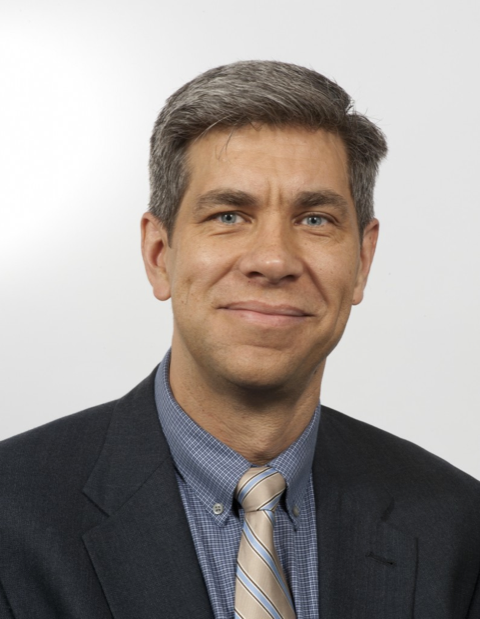
Josh Semeter is a Professor of Electrical and Computer Engineering, and Director of the Boston University Center for Space Physics (CSP). He was a member of the NASA UAP Independent Study Team: a group of 15 experts from diverse backgrounds and institutions, charged with bringing transparency and scientific rigor to UAP investigations (the subject of this lecture). And he recently served on the National Academy of Sciences steering committee that led the development of the 2024-2033 Decadal Survey for Solar and Space Physics. Before joining the faculty at BU he was a Senior Research Engineer at SRI International, and he worked as a research scientist at the Max Planck Institute for Extraterrestrial Physics.
Josh’s research has focused on exotic plasma phenomena in the near-space environment driven by interactions between the solar wind, the magnetosphere, and the ionosphere. His approach has been to synthesize measurements captured by ground-based and space-based instrument networks, which are connected using physics-based and data-driven modeling. A particular interest has been micro-scale plasma processes that require inferential techniques to study. He enjoys cultivating natural synergies among astronomers, astrophysicists, and engineers to better understand the origin and fate of our stellar-planetary system.
Josh is the author of over 100 technical papers and has given numerous invited talks and seminars on his work.
He earned a BS degree in Electrical Engineering at the University of Massachusetts at Amherst, and an MS and PhD degree at Boston University.
Webpage: Semeter Lab
LinkedIn: www.linkedin.com/in/joshua-semeter-8165946/
Minutes
On April 4, 2025, Members of the Society and guests joined the speaker for a reception and dinner at 5:45 PM in the Members’ Dining Room at the Cosmos Club. Thereafter they joined other attendees in the Powell Auditorium for the lecture proceedings.
In the Powell Auditorium of the Cosmos Club in Washington, D.C. President Larry Millstein called the lecture portion of the 2,513th meeting of the Society to order at 8:03 p.m. ET. He began by welcoming attendees, thanking sponsors for their support, announcing new members, and inviting guests to join the society. Scott Mathews then read the minutes of the previous meeting which included the lecture by David Bennett, titled “Detecting Exoplanets by Gravitational Microlensing: Survey Gaps & Rogues”. The minutes were approved, pending two minor corrections.
President Millstein then introduced the speaker for the evening, Joshua Semeter, of Boston University. His lecture was titled “Unidentified Anomalous Phenomena- From Sensationalism to Science”.
The speaker began by saying “When you point sensors of ever greater resolution at the world, you see new physics, and it is not incremental.” He went on to say “It is absolutely perilous to translate your biases and experiences from the visible into the infrared”. Semeter showed several examples of digital images, both visible and infrared, that appear to be something very different from what they actually are: what appears as a lampshade, is actually a rolling disk, what appears as two pieces of silverware, is actually three pieces of silverware at different temperatures.
The speaker discussed the 2022 NASA panel to investigate UAP’s. He described the make-up of the 16-member panel, which included data scientists, physicists, representatives from the FAA and the DoD, a science writer, and an astronaut. Semeter discussed the change in terminology, from UFO to UAP, describing the stigma and the provenance associated with the UFO acronym. He described the mission and the major findings of the panel. These findings included: the need for better data, the need for a disciplined scientific approach, the need to remove stigma around reporting, and the need for transparency between government agencies. The speaker presented the idea of “technical surprise”; the idea that clandestine technologies being developed by our adversaries may appear to be “anomalous”.
Semeter then presented what he called “Rules for the world in the infrared”. These included: an aura is an artifact of standard contrast enhancement, an IR image does not represent the size or shape of the actual object, objects can appear or disappear in IR images depending on their temperature compared to the background, and finally, the apparent motion of an object is affected by the motion of the observer due to parallax. The speaker showed a number of videos demonstrating each of these effects.
Semeter then showed several videos of popular examples of UAP events, many of which have been interpreted as evidence for extraterrestrials, anti-gravity technology, “trans-medium” vehicles, and exhaust-less propulsion. He began with the so-called Puerto Rico UAP event, which he concluded was “Two birds. Definitely two birds”. He then showed the “Go Fast” event, recorded by pilots from the USS Theodore Roosevelt. By analyzing the range and elevation data recorded in the video, he was able to estimate the actual air speed of the object. He concluded that the object was actually moving between 0 and 120 mph, depending on the bank-radius of the observing aircraft, and that the most probable velocity was 35-40 mph.
Switching from the infrared to night vision, the speaker showed videos of flashing, green, triangles; also purported to be extraterrestrial in origin. He showed how the Bokeh Effect causes the image of a point source to reproduce the shape of the camera aperture when slightly out of focus. Semeter showed that the mechanical aperture of the night vision camera used to record the video was triangular, and was in fact the exact same shape as the flashing triangle.
Returning to the infrared, Semeter showed video of the so-called “Gimbal Event”, which some people claim shows a vehicle with a distinct shape or structure, an exhaust-less propulsion system, an aura surrounding the vehicle, and the vehicle abruptly rotating in a way that is aerodynamically impossible. He then showed demonstration videos of the way in which glare, recorded by a digital camera, rotates with the camera, not with the object being recorded. He then presented a plausible and quite convincing argument that the apparent shape of the object was due to IR-glare, and that the object never actually rotated; the imaging system rotated.
The speaker ended his talk by listing some of the recommendations of the NASA UAP Panel. These included: creating a dedicated NASA point of contact, establishing baseline data for sensors used to record such events, and enlisting “citizen scientist” or crowd sourcing. Finally, he said “There is so much wonder in the universe that stems from real physics…we don’t need to make up explanations to keep things exciting.”
The lecture was followed by a Question and Answer session.
A member asked if there are other events or anomalies that still appear to defy explanation. Semeter responded, “Yeah. There definitely are.” He described a number of these events, noting that the lack of explanation may be related to incomplete data.
A member asked whether the pervasive use of digital cameras could result in imaging anomalies or artifacts, not associated with analog or film-based imaging techniques. Semeter responded that for the most part, digital cameras do behave like “wet-film”, however, things like pixel-blooming and hot-pixels are unique to digital cameras, and these artifacts need to be recognized and understood. He said that the advantages of digital imaging far outweigh the disadvantages.
A guest on the live stream asked if UAP events might provide useful information about unusual or elusive phenomena, even if they do not provide information about extraterrestrials. Semeter responded, “Absolutely. That is why we call this stuff anomalous phenomena…because we’ll take anything.”
After the question and answer period, President Millstein thanked the speaker and presented him with a PSW rosette, a signed copy of the announcement of his talk, and a signed copy of Volume 17 of the PSW Bulletin. He then announced speakers of up-coming lectures and made a number of housekeeping announcements. He adjourned the 2,513th meeting of the society at 9:33 pm ET.
Temperature in Washington, DC: 20.0° Celsius
Weather: Cloudy
Audience in the Powell auditorium: 96
Viewers on the live stream: 38
For a total of 134 viewers
Views of the video in the first two weeks: 606
Respectfully submitted, Scott Mathews: Recording Secretary