Revolutionizing Earth Observation with SmallSats and AI
How Planet Lab’s Satellite Constellations Are Transforming Our Understanding of the World
Will Marshall
Founder & CEO
Planet
Sponsored by PSW Science Member AC Charania
About the Lecture
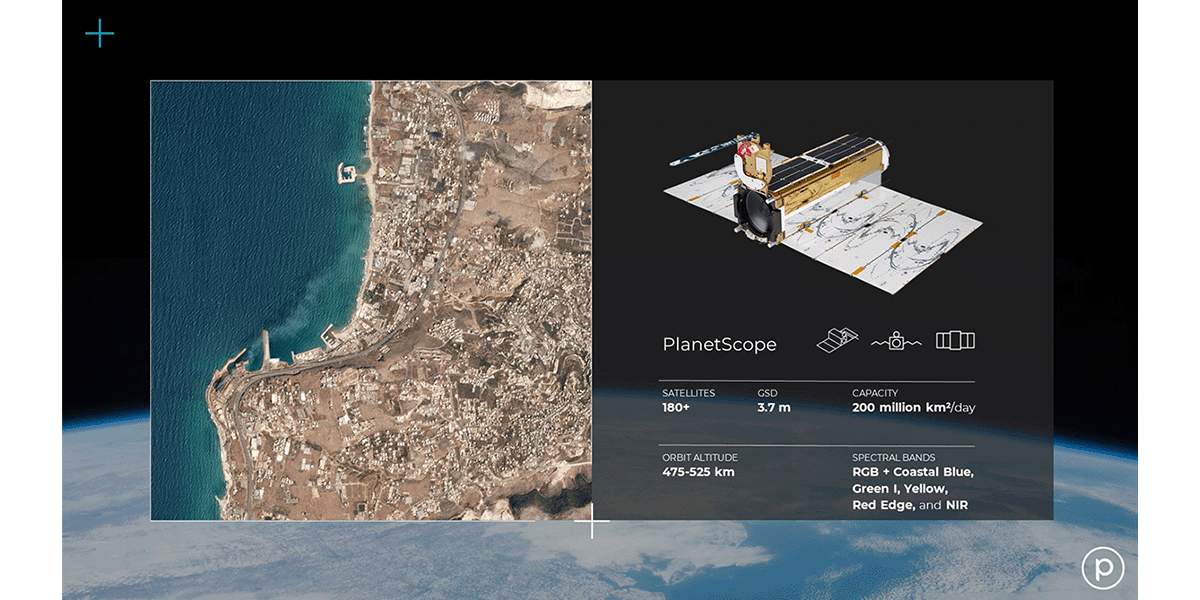
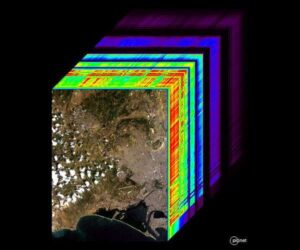
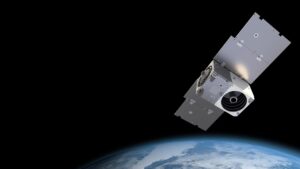
This lecture will discuss how a radical rethinking of satellite technology and mission architecture is reshaping how we observe and interact with our planet. Traditionally, Earth imaging relied on large, expensive satellites with limited revisit rates. Planet disrupted this paradigm by deploying the world’s largest constellation of small satellites — or “smallsats”—designed for high-frequency, high-resolution imaging of Earth’s entire landmass. These agile, short-lived spacecraft, launched in flocks and continuously refreshed, provide daily global coverage with visual and increasingly hyperspectral data, creating a living digital archive of our changing world.
The talk will explore how this unprecedented temporal and spatial resolution is being used across sectors: monitoring crop health and soil conditions in precision agriculture; detecting illegal deforestation and land degradation in near real time; tracking the progression of natural disasters to support emergency response; observing signs of climate change across ecosystems; and identifying the consequences of human activity from urbanization and infrastructure development to mass migration and the destruction wrought by war. It will also highlight the machine learning and data science techniques used to transform petabytes of satellite imagery into actionable intelligence.
The talk will examine not only the technical innovations behind Planet’s constellation, ranging from miniaturization and autonomous operations to rapid design cycles and cloud-based geospatial analytics, but also the broader implications of persistent, transparent Earth observation for science, policy, security, and sustainability. By making the planet observable every day, Planet is opening new possibilities for evidence-based global decision-making.
About the Speaker

Will Marshall is the Co-founder and Chief Executive Officer of Planet Labs PBC (commonly known as Planet), a leading Earth imaging and geospatial data company headquartered in San Francisco. Under his leadership, Planet has built and operates the world’s largest constellation of Earth-observing satellites. Before founding Planet in 2010, Marshall served as a scientist at NASA Ames Research Center, where he was involved in small spacecraft development, helped formulate the small spacecraft office there, worked as a systems engineer on the “LADEE” lunar orbiter mission, was a member of the science team for the “LCROSS” lunar impactor mission, served as Co-Principal Investigator on PhoneSat, and was the technical lead on research projects in space debris remediation.
Will’s research interests center on space systems engineering, Earth observation, climate monitoring, and the democratization of geospatial data for environmental and humanitarian applications. His work focuses on leveraging satellite constellations for near-real-time imaging of Earth to provide actionable insights for industries, governments, and nonprofits. He has also explored methods for reducing the cost and complexity of space missions through miniaturized satellite technology.
He is an author on a variety of scientific and technical publications in the fields of space science, Earth observation, and aerospace engineering. In addition, he has contributed to policy and public discourse on the role of space technology in sustainable development and global transparency.
He has received several honors and recognitions for his contributions to space innovation and entrepreneurship. These include being named a Young Global Leader by the World Economic Forum, being featured on Fast Company’s list of the Most Creative People in Business, and receiving The Royal Photographic Society) Award for Environmental Responsibility, together with Robbie Schingler. He and Planet have also been recognized by the World Economic Forum’s Tech Pioneers and by numerous space and technology industry groups for innovation in aerospace and data analytics.
Will earned a Masters in Physics/Space Science and Technology at the University of Leicester and a PhD in Physics at the University of Oxford, where he studied with Roger Penrose and Dirk Bouwmeester. Following his PhD he was a Postdoctoral Fellow at George Washington University and at Harvard.
Social Media
Wikipedia Profile: https://en.wikipedia.org/wiki/William_Marshall_(entrepreneur)
LinkedIn Profile: https://www.linkedin.com/in/will-marshall-715662/
X (Twitter) account(s) handle(s): @Will4Planet
Minutes
On September 5, 2025, Members of the Society and guests joined the speaker for a reception and dinner at 5:45 PM in the Members’ Dining Room at the Cosmos Club. Thereafter they joined other attendees in the Powell Auditorium for the lecture proceedings. In the Powell Auditorium of the Cosmos Club in Washington, D.C., President Larry Millstein called the lecture portion of the 2,520th meeting of the Society to order at 8:02 p.m. ET. He began by welcoming attendees, thanking sponsors for their support, announcing new members, and inviting guests to join the society. Scott Mathews then read the minutes of the previous meeting which included the lecture by Jason Dworkin, titled “OSIRIS-Rex Brings Samples of Bennu to Earth”. The minutes were approved, pending a minor correction.
President Millstein then introduced the speaker for the evening, Will Marshall, of Planet Labs (or Planet). His lecture was titled “Revolutionizing Earth Observation with SmallSats and AI”.
The speaker began by discussing the LCROSS mission, which found significant quantities of water on the moon, indicating that the total mission cost was $79 million. For NASA, this mission was “bizarrely cheap”. Marshall indicated that the extremely low cost of the LCROSS mission prompted some researchers to contemplate the possibility of even lower-cost space missions. He discussed the fact that a modern cellphone has most of the capabilities of a small spacecraft but costs many orders of magnitude less.
The speaker discussed how he and a few of his colleagues formed Planet as a “spin-out” of NASA, with the goal of finding much lower-cost ways to build spacecraft. This led to Planet’s specific mission: “To image the whole world every day and make global change visible, accessible & actionable.”
The speaker described Planet’s Dove Constellation, using more than 100 small satellites in circumpolar orbits, each acquiring a “strip-map” or line scan of the Earth, as the Earth rotates, with 3-meter resolution, in 8 spectral bands. Fifteen additional satellites, with 50 cm resolution, can zoom-in on any particular area up to 10 times per day. Marshall said that Planet has been able to do this because of revolutions in the space sector that have occurred over the past 10 to 15 years. These include a 4X reduction in rocket costs, and a 1000X increase in satellite capabilities. He indicated that these factors have led to a huge increase in the amount of Earth-imaging data currently available, and that the processing of these massive data sets provide an opportunity for AI.
The speaker then described Planet’s Fleet of satellites, including: Dove, Super Dove, SkySat, Tanager, and Pelican. He gave descriptions and performance specifications for each type of satellite, including: image resolution, spectral range, sensitivity, swath, and the data products produced. Marshall described specific uses of these data products, many of which utilized AI or machine learning. These included: detecting methane leaks, measuring agricultural yields, monitoring deforestation, forest fire prevention (by monitoring power lines), measuring drought conditions, and insurance assessments. Marshall discussed the role of Planet’s satellites in global security, with particular examples from the war in Ukraine. He showed images of a bridge constructed overnight, used by Russian troops before and during the initial invasion. He showed how AI could be used to assess damage to individual buildings after bombing and drone raids. He showed how a sequence of previously acquired images allowed authorities to re-construct the time-line of a mass grave, found in Crimea. Marshall emphasized the fact that these images, acquired in near real-time, bring an unprecedented level of accountability to modern warfare.
The speaker described several public/private collaborations that utilized Planet’s satellite data for environmental applications. These included: monitoring coral reef bleaching, mapping renewable energy facilities, and mapping CO2 and methane “super-emitters” down to the exact building. Marshall claimed that Planet’s satellite data has contributed to more than 3,500 scientific publications and is regularly used by 25 government agencies.
The speaker discussed how the AI revolution seeks to solve real-world problems, and therefore requires real-world data. He argued that Planet’s SmallSats are providing real-world data, in near real-time, which will allow AI’s to understand the Earth’s past and present, and therefore shape its future.
The speaker ended his talk by predicting that three “Copernican moments” are likely to happen in the next 2-5 years: first contact with AGI (artificial general intelligence), first contact with animals (decoding their communications), and first contact of life off-Earth (via atmospheric spectroscopy).
The lecture was followed by a Question and Answer session.
A new member asked about the size of the data sets being provided by Planet and the computational requirements to query such enormous amounts of data. Marshall responded that huge advances have been made in recent years, specifically citing the example of “embeddings” (a low dimensional, dense vector representation of high-dimensional data). He claimed that using embeddings, current systems can search an entire “base-map” of the Earth in under 10 seconds.
A member on the live stream asked whether AI’s using Planet’s data products could detect drones and UAV’s. Marshall responded that imaging systems with 50 cm resolution can pick up drones and UAV’s, and that AI’s would have a high probability of detecting them. He indicated that the ability of AI’s to detect small drones will almost certainly increase as higher resolution imaging systems are flown in the future.
A guest asked how Planet balances the public availability of data with potential privacy risks and the use of data by “hostile actors”. Marshall responded “That’s a very complicated question, and one that we spend a lot of time thinking about.” Marshall said that Planet has an ethics board that specifically looks at these questions. He said that Planet makes distinctions between certified and un-certified users, and that they restrict some of the temporal features of their data during times of war.
After the question and answer period, President Millstein thanked the speaker and presented him with a PSW rosette, a signed copy of the announcement of his talk, and a signed copy of Volume 17 of the PSW Bulletin. He then announced speakers of up-coming lectures and made a number of housekeeping announcements. He adjourned the 2,520th meeting of the society at 9:48 pm ET.
Temperature in Washington, DC: 21.1° Celsius
Weather: Fair
Audience in the Powell auditorium: 108
Viewers on the live stream: 26
For a total of 134 viewers
Views of the video in the first two weeks: 895
Respectfully submitted, Scott Mathews: Recording Secretary