Measuring the Universe: From Hubble’s Discovery to the Hubble Tension
What the Universe’s Expansion Rate Is Telling Us
Adam Riess
Bloomberg Distinguished Professor & Thomas J. Barber Professor of Physics and Astronomy
Johns Hopkins University
Co-Recipient of the 2011 Nobel Prize in Physics
Sponsored by PSW Science Member Charles Clark
About the Lecture
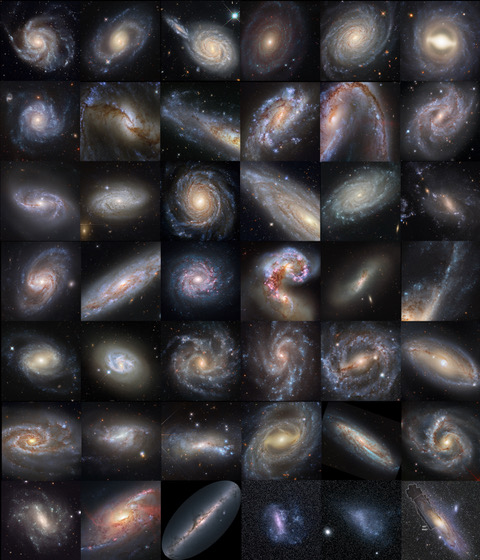
Over the last century, astronomers have pieced together a remarkable story of cosmic motion. Galaxies were once thought to be static, but we discovered they are racing apart as the universe expands. More recently, with powerful space telescopes, we learned the expansion is not slowing under gravity’s pull but accelerating, driven by a mysterious “dark energy.”
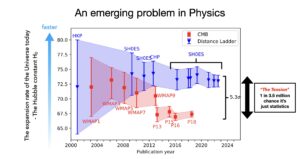
Today, new measurements have revealed another twist: the universe appears to be expanding faster than our best theory predicts.
This “Hubble Tension” — the mismatch between observation and theory — is now one of the most pressing puzzles in physics. It may signal cracks in our standard model of the cosmos or hint at new physics beyond it. In this talk, I will trace the surprising expansion history of the universe, from Edwin Hubble’s first measurements to the Nobel-winning discovery of cosmic acceleration, and finally to today’s unresolved tension. Along the way, I’ll show how astronomers measure the size and age of the universe using exploding stars and distant galaxies, and what these results may be telling us about the next great revolution in cosmology.
Additional Information
https://www.scientificamerican.com/article/could-early-dark-energy-resolve-the-mystery-of-cosmic-expansion/?utm_source=chatgpt.com
About the Speaker
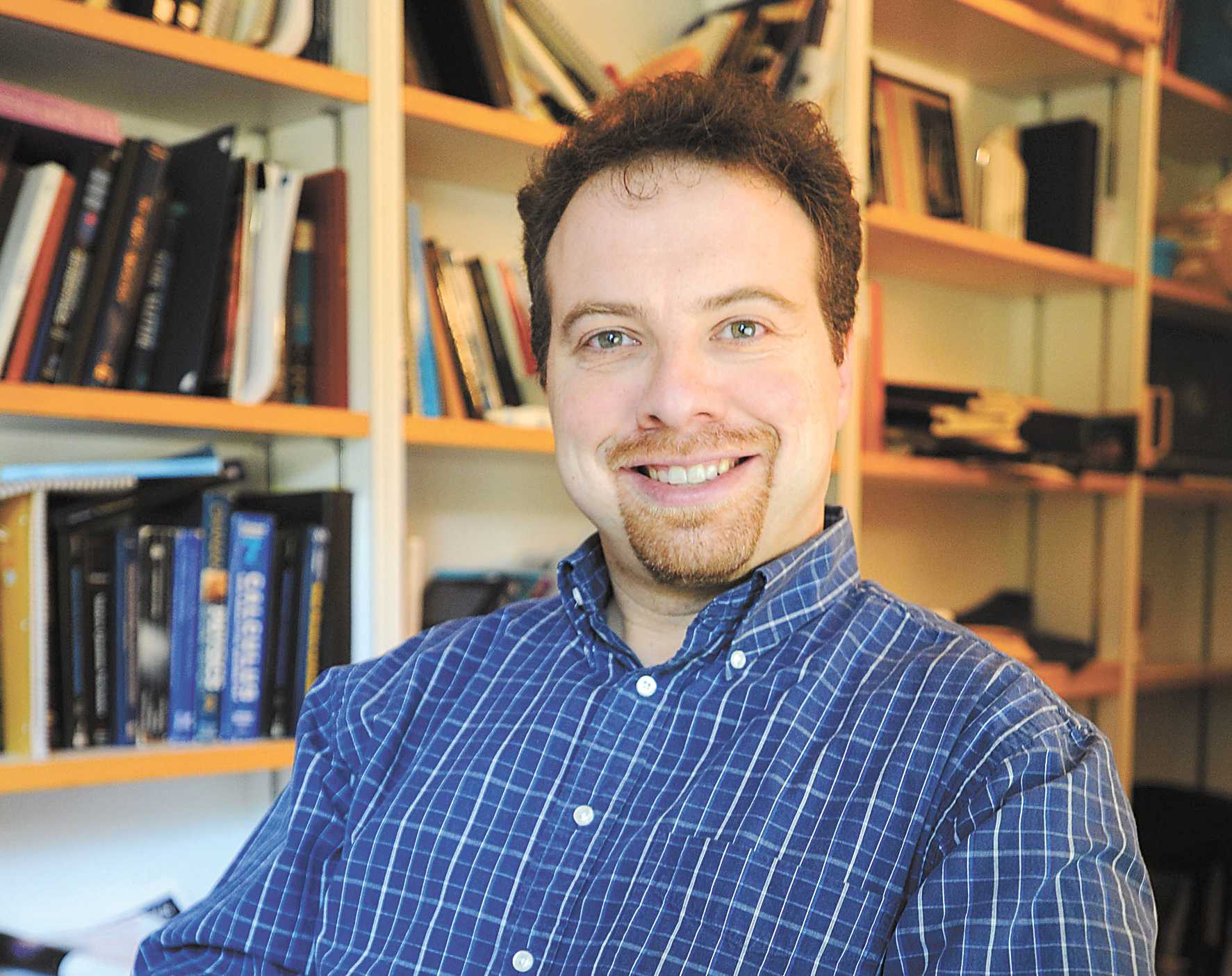
Adam G. Riess is the Bloomberg Distinguished Professor and Barber Professor of Physics and Astronomy at Johns Hopkins University, a Senior Member of the Science Staff at the Space Telescope Science Institute and a Nobel Laureate in Physics. Prior to joining the Hopkins faculty he was an Associate Professor and a Miller Fellow at UC Berkeley. Earlier, he also was a Hubble Fellow at the Institute for Advanced Study.
Adam is best known for his discovery, based on careful observations of Type 1a supernova “standard candles,” that the expansion of the universe is accelerating. This finding provided the first direct evidence for the existence of dark energy, the as yet uncharacterized force that currently is thought to constitute about 70% of the universe. The discovery profoundly changed astronomers’ view of the universe and led to a new standard model of cosmology. He was awarded the 2011 Nobel Prize in Physics for the discovery, together with Saul Perlmutter and Brian P. Schmidt.
Adam’s research currently continues to focus on observational cosmology with an emphasis on Type Ia supernovae, Cepheid variables, and the Hubble constant. He leads the SH0ES team, which uses the Hubble Space Telescope and the JWST to refine measurements of the Hubble constant to better understand the universe’s rate of expansion to address one of the most significant tensions in modern cosmology and to test the consistency of current cosmological models.
Adam is an author on over 300 peer-reviewed scientific publications, many of which are widely cited and several of which are considered landmarks of observational astronomy.
In addition to the Nobel Prize, Adam has received numerous other honors and awards including but not limited to The Breakthrough Prize in Fundamental Physics, The Shaw Prize in Astronomy, The Gruber Cosmology Prize, DOE’s E.O. Lawrence Award in Physics, and the Einstein Medal of the Albert Einstein Society. He is a member of the National Academy of Sciences and the American Academy of Arts and Sciences.
Adam earned a BS in Physics at MIT and a PhD in Physics from Harvard.
Social Media
Wikipedia: https://en.wikipedia.org/wiki/Adam_Riess
Minutes
On October 3, 2025, Members of the Society and guests joined the speaker for a reception and dinner at 5:45 PM in the Members’ Dining Room at the Cosmos Club. Thereafter they joined other attendees in the Powell Auditorium for the lecture proceedings. In the Powell Auditorium of the Cosmos Club in Washington, D.C., President Larry Millstein called the lecture portion of the 2,522nd meeting of the Society to order at 8:02 p.m. ET. He began by welcoming attendees, thanking sponsors for their support, announcing new members, and inviting guests to join the society. Scott Mathews then read the minutes of the previous meeting which included the lecture by Peter Shor, titled “Shor’s Algorithm and Quantum Supremacy”. The minutes were approved as read.
President Millstein then introduced the speaker for the evening, Adam Riess, of Johns Hopkins University. His lecture was titled “Measuring the Universe: From Hubble’s Discovery to the Hubble Tension”.
The speaker began by passing around his Nobel Prize Medal amongst all the attendees, saying that he believed everyone present was trustworthy. Riess said that observations have shown us that we live in a universe that is not only expanding, but accelerating, due to the presence of a mysterious component we call “dark energy”. He described the expanding universe in analogy to a loaf of raisin bread, expanding as it bakes in the oven: if you sit on one of the raisins, you see all the other raisins moving away from you.
The speaker described “standard candles”, celestial objects with a fixed, well-known, luminosity, such that astronomers can accurately measure their distance. He described “red-shift”, the shift in the wavelength of light due to the expansion of space. He showed the “Hubble plot”, which plots the recession velocity of galaxies as a function of their distance, and reveals a linear relationship. The slope of this plot gives an estimate of the Hubble constant: the rate of expansion of the Universe today. He described the way that the value of the Hubble constant has been measured more accurately over the last few decades, converging on a value of about 73 km/s/Mpc.
The speaker discussed the ultimate fate of the universe: whether it will continue expanding, come to a stop, or collapse back inward. Riess described how Einstein predicted a non-zero cosmological constant about ten years before Hubble’s discovery, based on the incorrect assumption that the universe was static. He discussed how astronomers measure the rate of expansion of the universe, indicating that light from distant galaxies takes billions of years to reach Earth, and that the light therefore provides information from billions of years ago. Riess discussed how astronomers used type-1A super novae, first described by Chandrasekar, as a standard candle to accurately measure the past trajectory of the universe. He said that it is easy to find these type-1A super novae because “they are the bright spot at the end of the arrow.”
The speaker described how, in the Fall of 1997, while processing data from the High-z super novae team, he calculated that the mass of the Universe was negative. Riess said that observation was the first indication of dark energy, and that it led him to re-introduce Einstein’s cosmological constant in order to fit the data. He described the email exchanges that followed amongst his colleagues, many expressing skepticism. In September 1998, after re-checking their data and calculations, he and his team published a paper, indicating that the Universe was expanding at an accelerating rate. Within nine months, a competing team published a paper confirming the result.
The speaker discussed possible explanations for the accelerating expansion. These included: vacuum energy (essentially, Einstein’s cosmological constant), dynamical dark energy (a new, transient energy that fills space), and modified gravity (corrections or modifications to General Relativity). Riess said that in the early 2000’s, they also considered the possibility of cosmic dust or fog, which would cause astronomers to overestimate the distance to the standard candles, and would therefore negate the conclusion of accelerating expansion. He described how advances in telescope technology, particularly with the launch of the Hubble Space Telescope, allowed cosmologists to rule out the cosmic fog hypothesis. Riess claimed that over the past two decades, several other measurement techniques have provided evidence for the dark matter and accelerating expansion hypotheses. These included: a new camera on Hubble, and the COBE, WMAP, and Plank satellites.
The speaker then described the so-called “Hubble tension”. Essentially, that two different ways of measuring the expansion rate of the Universe lead to two different rates: one rate calculated by measuring standard candles, the other calculated from the Big Bang Afterglow or cosmic microwave background. While both methods agree on the qualitative behavior of the expansion rate over the past 13 billion years, the present value of the two expansion rates disagree by about 9%; a statistically significant amount. This disagreement is called the Hubble tension.
The speaker ended his talk by saying that it is important to understand dark energy, not only because it makes up about 70% of the Universe, but also because it touches the central pillars of modern physics: quantum mechanics and general relativity.
The lecture was followed by a Question and Answer session.
A member asked about the morphology of the Universe (flat vs. curved), and whether curvature would play a role in expansion. Riess responded that the curvature of the Universe was “kind of orthogonal” to the expansion rate. Flat or curved, the accelerating expansion implies the existence of dark energy.
A member asked what kinds of new tools can engineers build to help resolve the Hubble tension. Riess responded one possibility would be the construction of a new generation of LIGO-type instruments, in order to detect “kilo-novae” (collisions between two neutron stars).
A member asked “By what right do you identify your measurements with the current value of the Hubble constant?”. Riess responded “Well…I have a Noble Prize!”, at which point the member re-phrased the question, asking “Why do you identify your measurements with the current value, as opposed to a value at some point in the past?”. Riess responded that most of his observations correspond to the last 100 million years, and are therefore very recent compared to the age of the Universe.
After the question and answer period, President Millstein thanked the speaker and presented him with a PSW rosette, a signed copy of the announcement of his talk, and a signed copy of Volume 17 of the PSW Bulletin. He then announced speakers of up-coming lectures and made a number of housekeeping announcements. He adjourned the 2,522nd meeting of the society at 9:25 pm ET.
Temperature in Washington, DC: 16.7° Celsius
Weather: Partly cloudy
Audience in the Powell auditorium: 104
[At the speaker's request, there was no live stream of the lecture. A recording was made available only to PSW Science members.]
Respectfully submitted, Scott Mathews: Recording Secretary