As if the Way One Died Mattered
The Last Gift: Finding a Cure for HIV
Davey Smith
Assistant Vice Chancellor - Clinical and Translational Research
Professor - Department of Medicine
Co-Director - San Diego Center for AIDS Research
University of California - San Diego
Sponsored by PSW Science Member Marlene Bekey in Memory of Ivan Bekey
About the Lecture
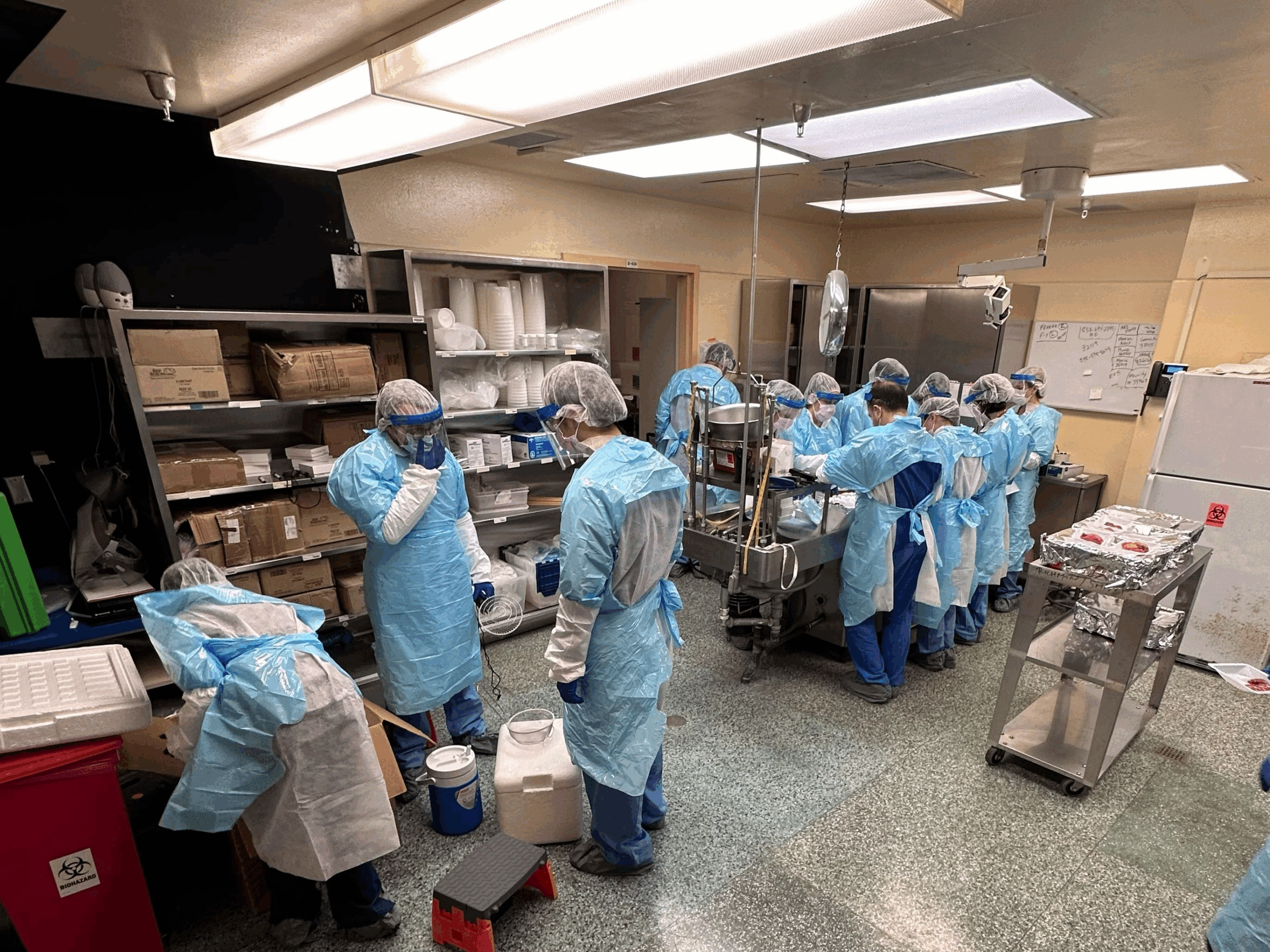
Here’s the problem: if we only look at blood, we miss where HIV lives. We have to go deeper.
People on modern treatment for HIV can feel well, but small pockets of the virus still hide deep in the body. Regular autopsies happen too late to study these hiding places. An autopsy done within hours after death closes that gap and lets us see real tissues while they are still fresh. People join because they want their lives to help others, and the study is built with clear consent and community oversight.
In this talk, I will show how our Last Gift program follows people with HIV closely near the end of life and then studies many organs right after death. We find that the virus hides in different places for different people, including the gut, the lymph nodes, the brain and spinal cord, liver, kidneys, etc. We can also tell the difference between cells that hold working copies of the virus and cells that do not.
What comes next reaches beyond HIV. The same fast, respectful peri-mortem research model can open new windows on cancer, brain and nerve diseases like Alzheimer’s and Parkinson’s, heart and lung disease, etc. We can learn why some treatments fail, and which targets are real in living tissue. With strong consent, clear community oversight, and partnerships, the Last Gift model can grow into a shared tissue and data resource for many fields. The aim is simple: bring the science to the bedside and the bedside to the lab, so that the hardest moments in life and medicine lead to answers for many diseases, not just one.
Selected Reading & Media References
https://lastgift.ucsd.edu/
https://www.science.org/content/article/last-gift-how-bodies-donated-research-may-help-find-cure-hiv
About the Speaker
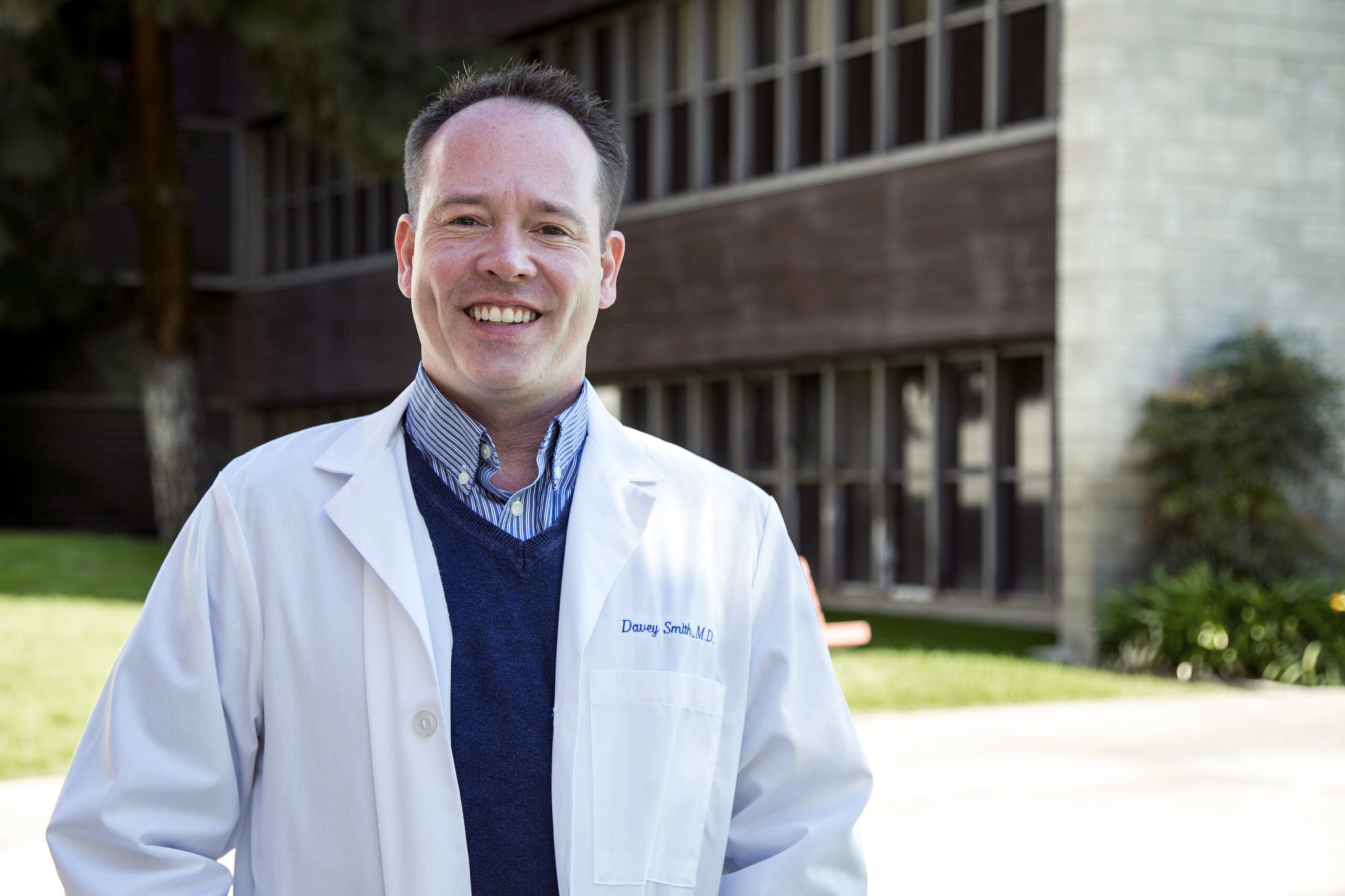
Davey M. Smith is Assistant Vice Chancellor of Clinical and Translational Research at the University of California – San Diego (UCSD), where he also is Chair of Faculty in the Department of Medicine, Chief of the Division of Infectious Diseases and Global Public Health and Professor of Medicine. He is also Co-Director of the San Diego Center for AIDS Research (CFAR) and holds the Florence Seeley Riford Chair in AIDS Research.
Davey’s research integrates laboratory science with clinical application. He uses molecular and immunologic techniques to answer clinically relevant questions and translates patient observations into productive new directions of laboratory research. His primary focus is on HIV transmission and reservoir dynamics: understanding how the HIV virus spreads and persists within the body, and discovering new ways to interrupt those processes. He is a pioneer in viral phylogenetics and characterizing the drivers of superinfection.
In response to the Covid pandemic, Davey refocused his research and engaged in the international effort to find safe and effective treatments, including being the international protocol co-chair for the ACTIV-2 treatment study (part of the US government’s response to COVID-19). He also spearheaded national collaborations among the 17 NIH-funded Centers for AIDS Research (CFARs), pooling resources and expertise from HIV research to accelerate COVID-19 understanding and therapy.
Davey is an author on more than 400 scientific publications, including seminal works on HIV transmission, viral reservoirs, and novel antiviral therapeutics. He was recognized by Clarivate as one of the top 1% of researchers in the world by scientific citations.
Among other honors and awards, Davey was named HIV Researcher of the Year by the HIV Medical Association, is a Fellow of the American Society of Clinical Investigation, and a Fellow of the American College of Physicians. He has received multiple NIH awards for innovation in translational virology, including recognition for his leadership in HIV prevention and COVID-19 therapeutic trials.
Davey earned a BS in Biology at the University of Tennessee, Chattanooga an MD from East Tennessee State University College of Medicine, and an MAS in Clinical Research at UC-San Diego.
Social Media
Webpage(s):
https://lastgift.ucsd.edu/
https://daveylab.ucsd.edu/
LinkedIn: https://www.linkedin.com/in/davey-smith-md-mas-facp-fidsa-40929a7a/
X (Twitter): @DaveySmithMD
Minutes
On December 19, 2025, Members of the Society and guests joined the speaker for a reception and dinner at 5:45 PM in the Members’ Dining Room at the Cosmos Club. Thereafter they joined other attendees in the Powell Auditorium for the lecture proceedings. In the Powell Auditorium of the Cosmos Club in Washington, D.C., President Larry Millstein called the lecture portion of the 2,527th meeting of the Society to order at 8:06 p.m. ET. He began by welcoming attendees, thanking sponsors for their support, announcing new members, and inviting guests to join the society. Scott Mathews then read the minutes of the previous meeting which included the lecture by Rosaly Lopes, titled “Volcanism and Cryovolcanism Throughout the Solar System”. The minutes were approved as read.
President Millstein then introduced the speaker for the evening, Davey Smith, of the University of California- San Diego. His lecture was titled “As if the Way One Died Mattered”.
The speaker began by asking the audience if they would be willing to participate in a research study if they had less than six months to live. He indicated that between 80 and 90% of people, both with and without HIV, would agree to participate. He said that participation rates drop to below 50% if participation would shorten their life by approximately 4 weeks. He discussed some of the issues associated with HIV research, saying that it is difficult to reach important anatomic sites in living patients, and autopsy studies are rarely performed quickly enough for accurate post-mortem characterization. He then described the “Last Gift Study”: a program in which altruistic persons with HIV and a terminal illness agree to rapid autopsy, performed within 6 hours of death.
Smith discussed the attitudes and opinions of the study participants and their next-of-kin, saying that the vast majority reported higher quality-of-life scores after enrolling in the study. He said that many participants used the phrase “My death will not be in vain”. He said that this sentiment was reflected in participants Beck depression scores, which indicated that patients in the study were less depressed as they approached death. In that sense, Smith said, the “Last Gift” program was not completely altruistic, in that the participants received measurable benefits.
The speaker discussed the ante-mortem data acquired before a patient dies, including: viral load, medications, alcohol consumption, drug use, narcotic pain killers, etc. He indicated that this data was crucial to the post-mortem analysis; mapping-out which tissues absorb which compounds. Smith then described the rapid autopsy process: a team of about a dozen clinicians (made up of doctors, pathologists, and dieners) remove organs from the body, dissect small pieces of tissue from each organ, seal them in labelled vials, and rapidly freeze the samples. Once frozen, these tissue samples are shipped to a variety of laboratories, each having expertise in a particular type of analysis.
The speaker then gave details about some of the data acquired from the post-mortem tissue. He said that opioids appeared in higher concentrations in the spleen and liver, and lower concentrations in muscle tissue. He said that anti-retroviral compounds were found in high levels in the stomach, vascular system, and several other tissues, but the concentrations found in the central nervous system were extremely low.
Smith indicated that HIV has two types: HIV DNA and HIV RNA. He said that anti-retroviral therapies were affective at stopping the RNA component, but not the DNA. He said that HIV evolves so rapidly that every infected person has a different genetic variant. He discussed how these variations informed the mapping of HIV viral reservoirs across different tissues, leading to the conclusion that the blood was the “highway”, spreading the virus throughout the body. He discussed how certain tissues in the central nervous system, like the basal ganglia and the hippocampus, have very high transcriptional activity: meaning that HIV DNA produces more HIV RNA. Smith said that researchers were somewhat surprised to learn that the spinal cord was a “sanctuary for HIV persistence”, and that HIV DNA appears to be evolving to its environment specifically in the spinal cord. He said that the spinal cord was the “highway” moving HIV around the central nervous system. Smith said that researchers had long suspected microglia in the brain acted as a persistent reservoir, but that only with the advent of rapid autopsy, were researchers at the University of North Carolina able to extract microglia from brain cells to confirm this.
The speaker discussed the relationship between HIV and cancer, saying that researchers hypothesize that HIV is causing “T-cells to become lazy”. T-cells with HIV appear to be less affective at destroying cancer cells, resulting in the comorbidity between HIV and cancer.
The speaker ended his talk by discussing people’s willingness to participate in research involving a variety of interventions or exposure to specific pathogens, at the end of life. He said over half of the people surveyed would be willing to participate. Smith said, “No matter how you are feeling about the human race these days, this should give you hope.”
The lecture was followed by a Question and Answer session.
A member asked if the Last Gift program and rapid autopsy could be used to study diseases other than HIV. Smith responded that they have submitted proposals for cancer grants, diabetes grants, heart failure grants, and rheumatology grants.
A member asked why the process of performing rapid autopsy and then freezing the tissue was better than freezing the body and performing autopsy later. Smith responded that after rapid autopsy, tissues are frozen with liquid nitrogen, whereas the conventional freezing of a body is done at about 4°C. He said that they use a controlled rate freeze with specific chemical additives that are appropriate for small pieces of tissue, and could not be implemented on an entire body.
A member on the live stream asked if the Last Gift program was listed on the NIH Clinical Studies website, and asked where people could learn more about participating in such research studies. Smith responded that they are listed on the NIH website, and that the study has its own website at: https://lastgift.ucsd.edu.
After the question and answer period, President Millstein thanked the speaker and presented him with a PSW rosette, a signed copy of the announcement of his talk, and a signed copy of Volume 17 of the PSW Bulletin. He then announced speakers of up-coming lectures and made a number of housekeeping announcements. He adjourned the 2,527th meeting of the society at 9:52 pm ET.
Temperature in Washington, DC: 3.3° Celsius
Weather: Partly Cloudy
Audience in the Powell auditorium: 54
Viewers on the live stream: 20
For a total of 74 viewers
Views of the video in the first two weeks: 161
Respectfully submitted, Scott Mathews: Recording Secretary