Tesla, Marconi, and the Invention of Radio
Dueling Wireless Giants, 1890-1920
Bernard Carlson
Professor Emeritus
University of Virginia & University of Galway
Sponsored by PSW Science Member A.C. Charania
About the Lecture
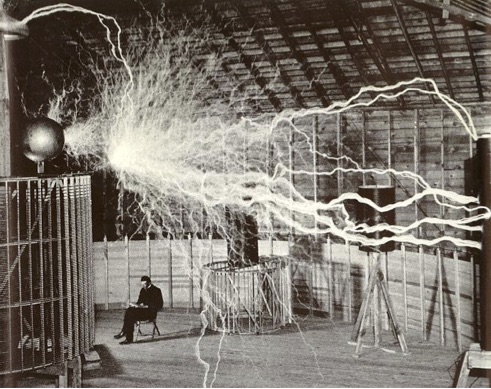
A core technology of the modern world is the use of electromagnetic or radio waves for the transfer of messages and energy. If one consults almost any textbook, you would be informed that modern radio was invented single-handedly by Guglielmo Marconi. However, the actual story is far more interesting and revealing much about how technological change really occurs. In this lecture, I will narrate the invention of radio as a race between two rivals, Marconi and Nikola Tesla, focusing on the technical and business choices each man made in response to the other. In doing so, I want to suggest how modern technologies are shaped by personality, business strategy, as well as twists and turns in patent litigation—all with an eye to how we should be preparing the next generation of innovators.
Selected Reading & Media References
Richard Barnett, “The Greatest Geek,” London Review of Books, Vol. 37, No. 3 (5 February 2015), https://www.lrb.co.uk/contributors/richard-barnett
Tesla lecture at Google: https://www.youtube.com/watch?v=r8sUWaKuQfc
About the Speaker
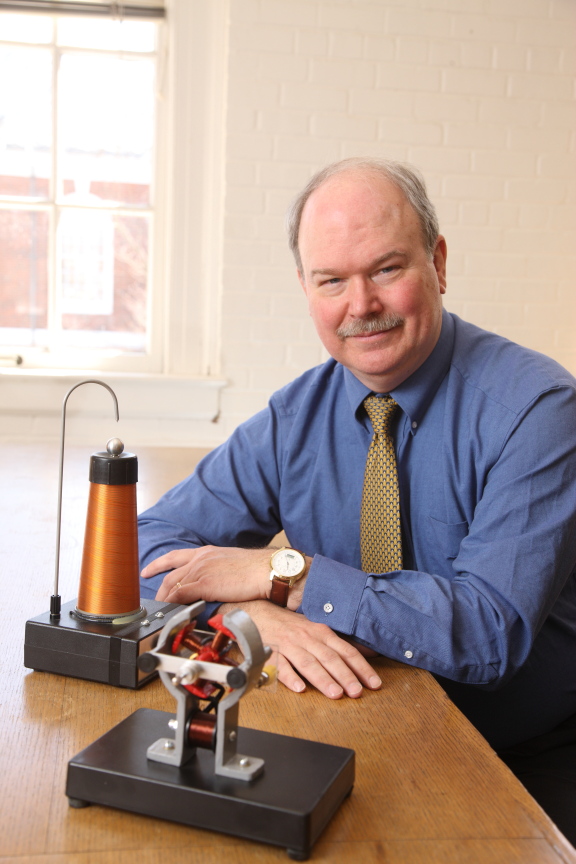
W. Bernard Carlson is the Joseph L. Vaughan Professor Emeritus of Humanities at the University of Virginia and recently retired as Program Manager for the AgInnovation program at the University of Galway, Ireland. Before moving to Galway in 2021, he chaired the Department of Engineering and Society. While at UVa, Bernie also held joint appointments in the History Department and the Bjoring Center for Nursing Historical Inquiry.
At UVA he played a central role in launching formal programs that integrate engineering with entrepreneurship, strengthening the pathways for stud Kamagra générique (Sildenafil) ents seeking to bring new technologies to market. Bernard continued this work as the manager of the AgInnovation program where over the last six years he helped over 200 adult learners create new businesses.
As a historian of technology, Bernard has written widely on innovation and entrepreneurship as well as on the role of technology in the rise and fall of civilizations. His books include Innovation as a Social Process: Elihu Thomson and the Rise of General Electric, 1870-1900 (Cambridge University Press, 1991), Technology Acheter Cenforce Professional in World History, 7 volumes (Oxford University Press, 2005) and Electrical Conquest: New Approaches to the History of Electrification (Springer, 2023). He has been particularly interested in understanding the creative processes behind invention and the ways technology reshapes business and society.
With support from the Sloan Foundation, Bernard wrote Tesla: Inventor of the Electrical Age. Published by Princeton University Press, the book has been translated into eleven languages. For his Tesla book, Bernard won bo www.elizabethbaylocksmiths.com.au th the Sally Hacker Prize from the Society for the History of Technology as well as the William Middleton Prize from the Institution of Electrical and Electronics Engineers.
In addition to his books, Bernard filmed 36 lectures on “Understanding the Inventions that Changed the World” for The Teaching Company. He has ju Back Pain Prevention st finished recording six audio lectures for The Teaching Company to celebrate the 150th anniversary of the invention of the telephone by Alexander Graham Bell. Bernard has also written provocative pieces on innovation for Forbes.com and other digital outlets and has an active business as an innovation consultant.
Bernard studied history and physics as an undergraduate at Holy Cross College, received his Ph.D. in the history and sociology of science from the University Buy Kamagra 100mg of Pennsylvania, and did his postdoctoral work at the Harvard Business School.
Webpage: https://innovationwithbernard.ie
LinkedIn: https://www.linkedin.com/in/w-bernard-carlson-a25704/
Minutes
On January 9, 2026, Members of the Society and guests joined the speaker for a reception and dinner at 5:45 PM in the Members’ Dining Room at the Cosmos Club. Thereafter they joined other attendees in the Powell Auditorium for the lecture proceedings. In the Powell Auditorium of the Cosmos Club in Washington, D.C., President Larry Millstein called the lecture portion of the 2,528th meeting of the Society to order at 8:08 p.m. ET. He began by welcoming attendees, thanking sponsors for their support, announcing new members, and inviting guests to join the society. Scott Mathews then read the minutes of the previous meeting which included the lecture by Davey Smith, titled “As if the Way One Died Mattered”. The minutes were approved as read.
President Millstein then introduced the speaker for the evening, Bernard Carlson, of the University of Virginia and the University of Galway. His lecture was titled “Tesla, Marconi, and the Invention of Radio”.
The speaker began by saying that disruptive technologies are often shaped, not by science or the marketplace, but by creative individuals and their passions. He said that among Tesla’s many inventions, the first practical AC motor was the most celebrated, but that his ideas about wireless power transmission were “visionary”. Carlson said that Tesla’s story was best told as a race between rivals. He described Tesla’s rivalry with Edison, often called the war of the currents, saying that it is commonly assumed that Edison was his biggest opponent. Carlson claimed that if you asked Tesla who his greatest nemesis was, he would say Guglielmo Marconi.
The speaker presented some details of Tesla’s life: born to an ethnically Serbian family in 1856, in what is now modern-day Croatia. He studied engineering in Austria. He first imagined a brushless AC motor in 1881 in Budapest. He worked for Edison Companies in Budapest and Paris. He immigrated to the US in 1884, and began working in the Edison Machine Works. His conflicts with Edison, particularly with respect to AC versus DC power systems, led Tesla to quit after about six months. Tesla worked a number of jobs during this time period, including “ditch digger”. In 1887, with help from Charles Peck and Alfred Brown, Tesla formed the Tesla Electric Company, and perfected a new, polyphase AC motor. The patent on this design was issued in 1888, and the patent rights were promptly sold to George Westinghouse.
Tesla works for Westinghouse until 1889, when he attends the Paris World’s Fair, where he learns about the work of Heinrich Hertz, creating electro-magnetic waves. In 1890 and 1891, Tesla repeats the Hertz experiments, scaling-up the power using Tesla coils. By late 1891, Tesla was performing demonstrations with Geissler tubes, showing the wireless transmission of electrical power, and discussing the possibility of wireless lighting systems for the home. During the period from 1892 to 1899, Tesla filed a number of patents on wireless power systems, including wireless lighting and wireless motors. While he promoted his ideas through lectures, private demonstrations, and newspaper interviews, no investors came forward to fund his work or purchase his patents.
The speaker said that around this time, Tesla began to think more about the ground current: attempting to minimize the EM-waves generated, while maximizing the ground current. Carlson said that Tesla came to the conclusion that it would be more efficient to send AC currents through the crust of the Earth, using the atmospheric EM-waves as the return path. Tesla moved to Colorado Springs, in order to conduct larger-scale experiments on ground currents, possibly motivated by Marconi’s successful radio transmission across the English Channel. Here he constructed his largest Tesla coil to date, and erroneously concluded that the ground currents could transmit power without loss. Carlson indicated that Tesla allowed no witnesses or observers during these experiments.
In 1900, Tesla moved back to New York City, claiming he had solved all the problems with both radio and wireless power transmission, and that he had received messages from Mars. Carlson said that in 1901, Tesla secured a significant investment from J.P. Morgan, and began construction of his final laboratory at Wardenclyffe, on Long Island. In December of that year, Marconi successfully sent a signal across the Atlantic. The speaker said that as a result of Marconi’s success, combined with other market forces, Tesla was unable to acquire additional financing, and Morgan was unwilling to provide more.
The speaker said that by the end of the First World War, Tesla was almost completely broke, and he filed a lawsuit against “Marconi Wireless”. Carlson claimed that the law suit was not fully resolved until 1943, when the Supreme Court effectively ruled that Tesla invented the radio.
The speaker ended his talk by saying the question, “Who invented radio?”, has different answers depending on how we define “radio”. He said that disruptive technologies often involve multiple steps and multiple actors.
The lecture was followed by a Question and Answer session.
A guest asked what effect, if any, the discovery of the ionosphere had on Tesla’s thinking. Carlson responded that by that time, Tesla had no money and was unable to perform any experiments relating to the propagation of radio waves. He said that during this period Tesla was working on various mechanical engineering projects, including bladeless turbines.
A member asked why Tesla was able to convince himself that wireless power transmission through the Earth would be lossless, even if the Earth acted like an incompressible fluid. Carlson responded “the answer is that I don’t honestly know”. He said it had to do with Tesla’s conception (or misconception) of standing waves.
A member on the live stream asked “Why did Tesla think, much less be so certain, that electromagnetic waves were longitudinal?” Carlson responded that he wasn’t really sure, but that it had something to do with the results he got from experiments with Geissler tubes.
After the question and answer period, President Millstein thanked the speaker and presented him with a PSW rosette, a signed copy of the announcement of his talk, and a signed copy of Volume 17 of the PSW Bulletin. He then announced speakers of up-coming lectures and made a number of housekeeping announcements. He adjourned the 2,528th meeting of the society at 10:09 pm ET.
Temperature in Washington, DC: 10° Celsius
Weather: Mostly Cloudy
Dinner Attendance: 68
Audience in the Powell auditorium: 116
Viewers on the live stream: 53
For a total of 169 viewers
Views of the video in the first two weeks: 321
Respectfully submitted,
Scott Mathews
Recording Secretary