Intraterrestrials: The Strangest Life on Earth
How organisms that live deep beneath Earth's surface are challenging basic assumptions about the nature of life
Karen Lloyd
Professor of Earth Sciences & Marine and Environmental Biology
University of Southern California
Sponsored by PSW Science Member Charles Clark
About the Lecture
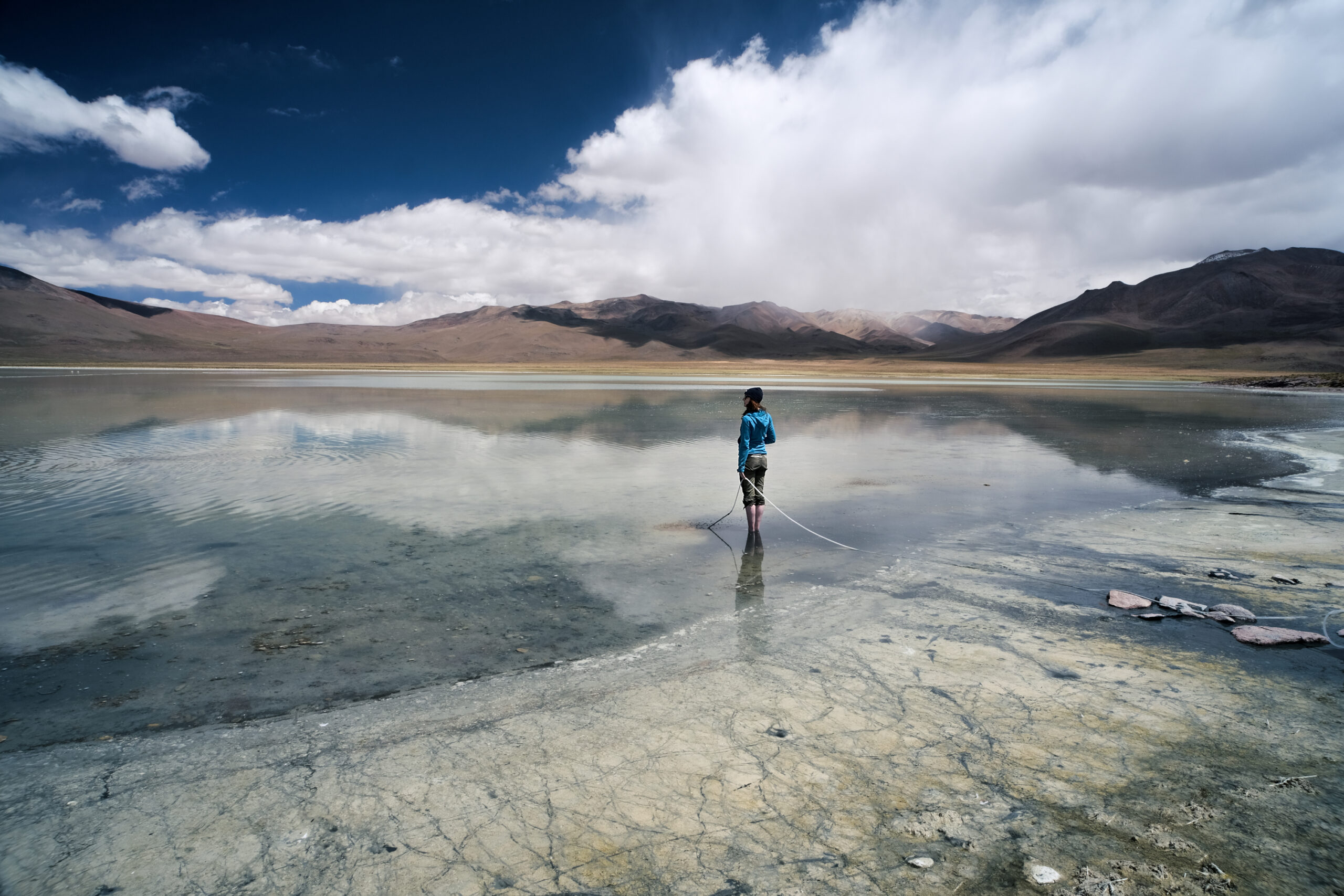
The discovery of intraterrestrials – life buried deep within Earth’s crust – in the past few decades has revolutionized understanding of the kinds of life present on Earth. Many of these organisms are on deep evolutionary branches on the tree of life, and have functions and ways of living that challenge what is known about biology. One of the strangest things about them is that much of this vast subsurface ecosystem, which has more living microbial cells then the number of stars in the universe, seems to be living in a long-term suspended animation. They are living and breathing, but do not divide and make new cells for thousands or even hundreds of thousands of years because they lack the energy flow rates necessary to allow even a single cell division. This puts this life more in the realm of geology than biology, and studying it may lead to clues about what limits lifespan across all types of life on Earth.
Selected Reading & Media References
Lloyd, K.G. 2025. Intraterrestrials: Discovering the Strangest Life on Earth, Princeton University Press.
Lloyd, K.G., A.D. Steen. 2025. Defining ultra-slow-growing extremophilic microorganisms as Aeonophiles. Nature Microbiology. 10: 1555-1557.
Lloyd, K. G. 2020. Time as a microbial resource. Environmental Microbiology Reports. 13(1): 18-21.
About the Speaker
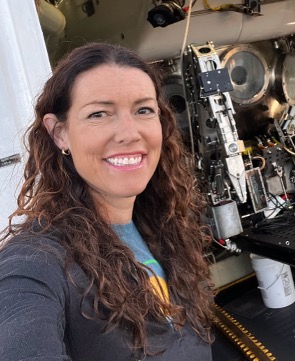
Karen G. Lloyd holds the Wrigley Chair in Environmental Studies and is Professor of Earth Sciences at the University of Southern California. Previously, she was a member of the faculty in the Department of Microbiology at the University of Tennessee, Knoxville.
Karen’s research focuses on the microbial biogeochemistry of the deep subsurface biosphere, including uncultured microorganisms in extreme environments such as deep oceanic sediments, hydrothermal vents, cold methane seeps, coastal estuaries, Arctic permafrost, and subduction zones. Her research integrates phylogenetic and functional data from RNA, DNA, proteins, and metabolites with geochemical parameters to understand carbon and energy sources, organic matter transformations, and the role of deep subsurface microbes in global processes such as methane cycling and their effects on climate.
Karen has done fieldwork in many locations to find and study these organisms, including the Arctic, Central and South America, the Baltic Sea, North Carolina estuaries, Siberia, and Mariana Trench seamounts. The work has advanced knowledge of methane-eating microbes’ role in sequestering greenhouse gases And it has revealed new microbial clades with ultra-slow metabolisms that can persist for thousands of years without reproducing. Understanding these organisms has led to the characterization of the “Aeonophiles” – ultra-slow-growing extremophiles, and has expanded understanding of evolutionary processes and the extremes of life’s limits.
Karen is an author on more than 100 peer-reviewed publications, along with several book chapters, and she is sole author of the book, Intraterrestrials: Discovering the Strangest Life on Earth which was longlisted for the PEN/EO Wilson Literary Award. She has delivered two TED Talks, appeared on numerous podcasts including Sean Carroll’s Mindscape and Coast to Canopy, and given many keynote addresses.
Among other honors and awards Karen has received a NASA Early Career Fellowship, a Simons Early Career Investigator award, an Alfred P. Sloan Research Fellowship, an NAS Kavli Fellowship, a U Tennessee Chancellor’s Award and Woods Hole Oceanographic Institution Holger Jannasch Award. She was also nominated for the UTK Blavatnik Award. And she won First Place in the Wild Orbit Film Festival in Paris.
Karen earned a BA in Biochemistry at Swarthmore College and an MSc and PhD in Marine Sciences at the University of North Carolina at Chapel Hill.
Social Media
Webpage(s): https://dornsife.usc.edu/lloyd/
LinkedIn Profile: https://www.linkedin.com/in/karen-lloyd-8b427250/
Bluesky: @karenlloyd.bsky.social
Instagram: @karenlloyd946
Minutes
On February 20, 2026, Members of the Society and guests joined the speaker for a reception and dinner at 5:45 PM in the Members’ Dining Room at the Cosmos Club. Thereafter they joined other attendees in the Powell Auditorium for the lecture proceedings. In the Powell Auditorium of the Cosmos Club in Washington, D.C., President Larry Millstein called the lecture portion of the 2,531st meeting of the Society to order at 8:02 p.m. ET. He began by welcoming attendees, thanking sponsors for their support, announcing new members, and inviting guests to join the society. Scott Mathews then read the minutes of the previous meeting which included the lecture by Stephen Eckel, titled “Measuring the Emptiness of a Vacuum”. The minutes were approved as read.
President Millstein then introduced the speaker for the evening, Karen Lloyd, of the University of Southern California. Her lecture was titled “Intraterrestrials: The Strangest Life on Earth”.
The speaker began by discussing early work attempting to correlate the population of a particular microbe as a function of methane concentration, only to find that the vast majority of the collected microbes were, in fact, unidentified. She described the fact that these unidentified microbes were found in a variety of estuaries, all over the Earth. She claimed that there are about 3 x 1029 living, microbial cells buried in the Earth’s seafloor. She said that single-cell gene sequencing using flow cytometry allowed the identification of a number of genes from these “archaea”: a type of single-celled, prokaryotic organisms, whose name is derived from the Ancient Greek word for ancient or primitive.
Lloyd discussed the fact that these intraterrestrials were sequestering carbon in ways that would not have been predicted before the archaea were discovered. She described how tectonic subduction moved carbon down to the Earth’s mantle, which could later be quantified by measuring both volcanic eruptions and hot springs. The speaker claimed that intraterrestrials could be major drivers of geological carbon sequestration underground.
The speaker discussed the fact that because intraterrestrials are interacting with geology, it is reasonable to ask about their lifetimes, given that geology changes on such long timescales. She described the amount of power available to cells on the sea-floor for metabolism, indicating that there is insufficient power for them to reproduce, but nonetheless, they constitute one of Earth’s largest biospheres, comprising astronomical numbers of individual cells. Lloyd said that given the tiny amounts of energy and interactions with geology, it is possible that these organisms live for tens of thousands, if not hundreds of thousands of years. As a result, she and her colleagues decided to call this class of organisms Aeonophiles. She discussed the process of acquiring samples from permafrost in the Arctic: samples which had been unchanged for approximately 120,000 years. She claimed that DNA, extracted from Asgard archaea, indicated that these Aeonophiles were in fact still alive. Lloyd claimed that these Asgard archaea have been grown in culture, and that they have “weird arm-like thingies.” She said that these appendages may help them survive by reaching through tight pore spaces in marine sediments.
The speaker then discussed possible ways to use intraterrestrials. These included carbon sequestration and precious metal recycling. She said that intraterrestrials produce huge numbers of proteins which are very dis-similar to known proteins. She indicated that these unusual proteins could potentially be used for a wide variety of technological applications. Lloyd said that if intraterrestrials could provide proteins or enzymes to chelate metals, they could “be the architects of their own salvation from deep-sea mining” which threatens their ecosystem.
The speaker ended her talk by acknowledging her collaborators and funding agencies.
The lecture was followed by a Question and Answer session.
A member asked about the presence of parasites and viruses in the intraterrestrial biosphere. Lloyd responded “I think they are starving, too”, saying that the extremely low energy density in the sea-floor makes it very difficult for all forms of life.
A member asked what these results said about the possibility of life on other planets or moons. Lloyd responded that she feels relatively confident that there is life at the bottom of Europa’s ocean, saying that she regularly goes to places on Earth that appear completely lifeless, only to find a variety of species thriving.
A member asked whether deep sea deposits of methane act as a food-rich environment for intraterrestrials, and if so, could they be used to prevent large quantities of methane from being released into the atmosphere. Lloyd responded “Thank you for bringing us back around to methane”, her favorite molecule. She said that the problem with such a strategy would be timescale: large releases of methane appear to be accelerating because the thawing of permafrost is rapid. She said it might be possible to cultivate these organisms to metabolize methane faster, but that the slow growth-rate of intraterrestrials makes it difficult.
A member on the live stream asked about the morphology of liquid water in permafrost, and if it was similar to the distribution of liquid water in deep sea sediment. Llyod responded that it was a very different morphology, with liquid water in permafrost existing in “brine veins”; very small channels containing high concentrations of salt.
A guest on the live stream asked “If there are intraterrestrials on Mars, how would you look for them?” Lloyd responded that we would need to look at “mud volcanos”. She said that it is widely believed that these structures bring subsurface material up to the Martian surface, and that this would be the most likely place to find them.
After the question and answer period, President Millstein thanked the speaker and presented her with a PSW rosette, a signed copy of the announcement of her talk, and a signed copy of Volume 17 of the PSW Bulletin. He then announced speakers of up-coming lectures and made a number of housekeeping announcements. He adjourned the 2,531st meeting of the society at 9:50 pm ET.
Temperature in Washington, DC: 5.6° Celsius
Weather: Light rain
Dinner attendance: 50
Lecture attendance:
In person: 96
Live Stream: 43
For a total of 139 viewers
Views of the video in the first two weeks: 570
Respectfully submitted,
Scott Mathews: Recording Secretary