Is There Life Out There?
The History, Science, and Relevance of the Search for Life Beyond Earth
Bill Diamond
President & CEO
The SETI Institute
Sponsored by PSW Science Member Charles Clark
About the Lecture
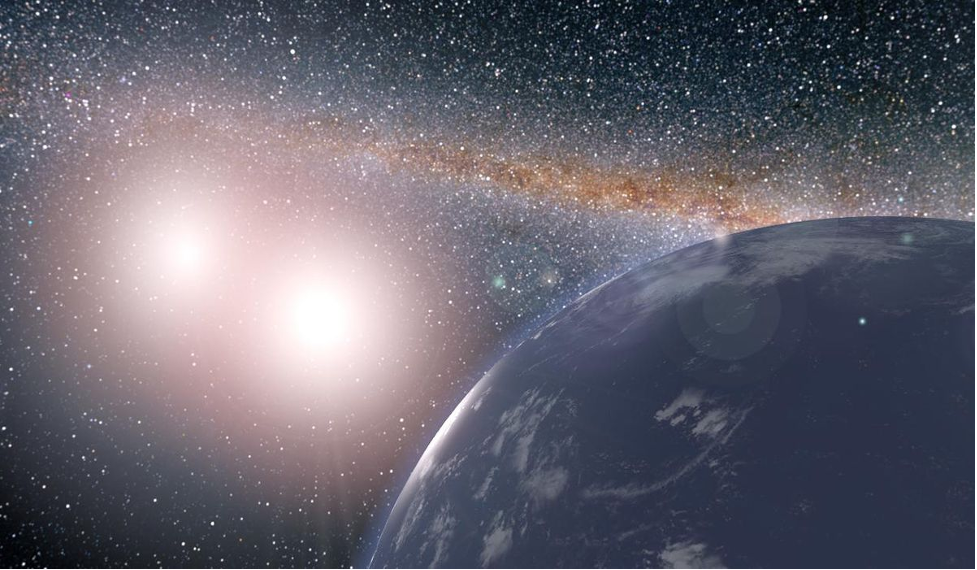
Greek philosophers pondered the question of habitable worlds and life beyond Earth nearly 2,500 years ago. Maya and Aztec cosmologies included celestial beings inhabiting the sky, and native American traditions describe star peoples and star ancestors. The question ‘Are we alone in the Universe?’ likely dates to our earliest ancestors who first gazed upon the stars and wondered. For the vast majority of human history, however, this question has been confined to the domains of religion and philosophical speculation. But starting with the publication of a seminal paper in 1959 and the first SETI experiment using a radio telescope in 1960, the question of life beyond Earth has moved squarely into the domain of science.
Recent discoveries of the ubiquity of exoplanets and the abundance of potentially habitable worlds has served to amplify interest across the scientific community. As such, the technological and scientific search for life elsewhere in the cosmos is now among the most profound and consequential scientific inquires.
The use of radio and now optical telescopes for SETI, or the Search for Extraterrestrial Intelligence, is not an endeavor that seeks intelligence directly, but rather an effort that seeks evidence of technologies or engineered phenomena that serve as a proxy for life and intelligence beyond our solar system. Yet SETI research is only one component of a wide-ranging multidisciplinary effort to understand the nature and origins of life and intelligence in the universe and in so doing, to understand our place in the cosmos and indeed what it means to be human.
This talk will describe the history, evolution, technology, science and relevance of the search for life beyond Earth. It will delve into the three fundamental modalities of in-situ, remote sensing and SETI techniques and their associated parameter space, and explore the Drake Equation as providing a reference framework and roadmap for Astrobiology and SETI research. The lecture will describe these methodologies in detail, including: observational and radio astronomy; advanced signal processing and data analytics; laboratory research; field expeditions; space missions; theory and modeling; and instrumentation development, and it will explain why we are now living in the 2nd Copernican revolution.
The lecture will address the so-called ‘Fermi Paradox’ which ponders the absence of evidence for alien civilizations given cosmological time scales and examine the ‘L’ variable of the Drake Equation, which may hold the answers.
At its core, the search for life beyond Earth is an outward looking exploration. But at the same time, this endeavor holds up a mirror to humanity, as it is shaped by our biology, our evolution, our consciousness, our curiosity and how we see and interact with the natural world around us. Humanity’s most profound discovery may yet be constrained only by our imagination.
Selected Reading & Media References
SETI Institute Website: www.seti.org
Sara Scoles, (2017) “Making Contact – Jill Tarter and the Search for Extraterrestrial Intelligence,” Pegasus Books.
Frank Drake, Dava Sobel (1997) “Is Anyone Out There – The Search for Extraterrestrial Intelligence,” Delacorte Press.
Nathalie Cabrol (2024) “The Secret Life of the Universe – An Astrobiologist’s Search for the Origins and Frontiers of Life,” Scribner.
Understanding the Drake Equation: https://www.seti.org/research/seti-101/drake-equation/.
Where it all began: COCCONI, G., MORRISON, P. Searching for Interstellar Communications. Nature 184, 844–846 (1959). https://doi.org/10.1038/184844a0
The “Trailer” for after the talk: Boston Museum of Science: https://f.io/8FnzVxZM.
About the Speaker

Bill Diamond is President and Chief Executive Officer of the SETI Institute. Previously, he was CEO of WaveSplitter Technologies, CEO of Denselight Semiconductor, CEO of Xradia, President of COMET Technologies USA and he held executive leadership roles at Oclaro.
At the SETI Institute he oversees astrophysics and astrobiology research programs focused on detecting and understanding life beyond Earth, on planetary science, and on the origins and evolution of life on earth and more generally.
Bill’s work has centered on lasers, photonics, optical communications networks, X-ray imaging systems, and semiconductor processing technologies. It has largely been in applied physics and advanced instrumentation, areas directly relevant to astronomical observation and space science technologies, and he has guided the commercialization of high-precision optical and imaging platforms used in scientific and industrial applications.
Among other professional distinctions, Bill has served on the Advisory Board of the McDonough School of Business at Georgetown University. He is a member of the Optical Society of America (now Optica), the International Astronautical Congress, and the American Association for the Advancement of Science. He also serves on the Board of Directors of the Bay Area Science and Innovation Council.
Bill earned a BA in Physics at the College of the Holy Cross and an MBA at Georgetown University.
Webpage(s): https://www.seti.org/people/bill-diamond/
LinkedIn Profile: https://www.linkedin.com/in/bdiamond-seti
YouTube Channel(s): https://www.youtube.com/@SETIInstitute
Minutes
On March 20, 2026, Members of the Society and guests joined the speaker for a reception and dinner at 5:45 PM in the Members’ Dining Room at the Cosmos Club. Thereafter they joined other attendees in the Powell Auditorium for the lecture proceedings. In the Powell Auditorium of the Cosmos Club in Washington, D.C., President Larry Millstein called the lecture portion of the 2,533rd meeting of the Society to order at 8:08 p.m. ET. He began by welcoming attendees, thanking sponsors for their support, announcing new members, and inviting guests to join the society. Scott Mathews then read the minutes of the previous meeting which included the lecture by Jonathan Coopersmith, titled “Robert Goddard and the Invention of the Liquid-Fueled Rocket”. The minutes were approved, pending a minor correction.
President Millstein then introduced the speaker for the evening, Bill Diamond, of the SETI Institute. His lecture was titled “Is There Life Out There?”.
The speaker began by saying that the search for life beyond Earth is one of humanity’s most profound quests. Diamond said that the SETI Institute has but one question: Are we alone in the universe? He claimed that this question has transitioned from the domain of religion and philosophy to the domain of science. He argued that, more recently, this question has transitioned to the domain of technology.
The speaker described how this basic question can be divided into several more specific questions concerning: the prevalence of life, the Drake equation, and the observational techniques available. Diamond discussed the history of this question, dating back more than 2000 years, by discussing the ideas of Democritus, Epicurus, and Lucretius, who believed the Universe was infinite, and therefore contained an infinite number of worlds. The speaker described opposing views put forth by Aristotle and Ptolemy, who believed in a stationary, Earth-centered Cosmos.
The speaker claimed that the Copernican Revolution of 1543 constituted the first of two paradigm shifts. Diamond said that the Copernican Revolution marked “a complete transformation of how humans perceive themselves in the Universe”, and laid the intellectual foundation for modern science.
The speaker discussed the fact that ancient Indian, Chinese, and Islamic cultures all included “pluralistic cosmology”, each professing the belief that the Universe contained countless worlds and that life pervades the cosmos.
Diamond introduced the concept of “technosignatures”; measurable signs or effects that indicate the presence of past or present technology, and therefore act as a proxy for life and intelligence. He described how early telescopes caused some astronomers to conclude that canals or channels existed on the surface of Mars. It took until 1965, with Mariner IV’s flyby of Mars, to prove that no such canals existed. The speaker claimed that the essence of SETI research was to look for such engineered structures or technosignatures.
The speaker discussed how modern technology allowed SETI researchers to look for technosignatures in the electromagnetic spectrum; particularly with respect to the 1.42 GHz Hydrogen line, which would be an ideal “hailing frequency”. He said that Frank Drake searched for such signals in 1960 using the Green Bank Radio Observatory, but found none. More importantly, from Diamond’s perspective, “the age of SETI had begun”. He described each of the terms in the famous Drake equation, to estimate the number of extraterrestrial civilizations:
• What is the birth rate of stars?
• How many stars have planets?
• How many planets are ‘habitable’?
• How many habitable planets develop life?
• Of those, how many develop intelligent life?
• When intelligence emerges, how often does technology arise?
• What is the ‘duration’ of a technological society?
The speaker claimed that the technological tools needed to answer each of these questions is, for the first time, available to researchers. He stated SETI’s mission as “To lead humanity’s quest to understand the origins and prevalence of life and intelligence in the Universe, and to share this information with the world.” He presented three methods to search for life in the Universe: in-situ instruments, remote sensing, and SETI observations. He described the strengths and weaknesses of each of these techniques.
Diamond claimed that the search for exoplanets has shown that the vast majority of stars are, in fact, solar systems. The speaker called this fact “the new Copernican Revolution”. He showed animations of techniques used to identify exoplanets, including the radial velocity method and the periodic dimming or planetary transit method. He described how the Kepler mission, launched in 2009, revealed thousands of new exoplanets, most of them between the size of Mars and Neptune. The speaker claimed that these observations lead to the conclusion that there are 10’s of billions of habitable planets in the Milky Way alone.
The speaker described what he called SETI observations, radio and optical observations that could detect technosignatures, potentially from as far away as 100,000 light years. He showed images of a number of radio observatories used by the SETI Institute.
The speaker ended his talk by saying that the answer to the question “Are we alone”, is “Probably not.”
The lecture was followed by a Question and Answer session.
A member on the livestream asked about the use of “spectrum modulation” and how such techniques would make radio signals from another civilization appear as random noise. Diamond agreed that spectrum modulation would make such signals harder to recognize, but that AI and machine learning will likely provide the ability to distinguish broad spectral features, as well as some forms of modulation.
Other members on the livestream asked which radio telescopes around the world were being used for SETI research. Diamond said that SETI collaborates with the “Break-through Listen” initiative. Through this project, SETI buys time on: the Allen telescope array, the Very Large Array, the Parks telescope in Australia, the Meerkat Observatory, the Sardinia Radio telescope, the Green Bank telescope, and several others. Diamond said that in recent years, SETI has enjoyed a lot more cooperation from observatories around the world.
A member asked if we are looking for radio signals from distant civilizations, why aren’t we broadcasting similar signals, in the hope that they are looking for us. Diamond responded by first defining what he called “leakage radiation”: diffuse or omnidirectional RF signals that could only be detected from distances less that about 100 light years. This is distinct from a high-intensity, directional signal that would be intentionally generated. He said the reason we do not generate such deliberate signals is that many scientists think it is a bad idea, and that “calling attention to ourselves” could have serious consequences.
After the question and answer period, President Millstein thanked the speaker and presented him with a PSW rosette, a signed copy of the announcement of his talk, and a signed copy of Volume 17 of the PSW Bulletin. He then announced speakers of up-coming lectures and made a number of housekeeping announcements. He adjourned the 2,533rd meeting of the society at 10:09 pm ET.
Temperature in Washington, DC: 13.9° Celsius
Weather: Light Rain
Dinner attendance: 60
Lecture attendance:
In person: 126
Live Stream: 50
For a total of 176 viewers
Views of the video in the first two weeks: 426
Respectfully submitted,
Scott Mathews, Recording Secretary