The Earth BioGenome Project
Reading the Library of Life
Harris Lewin
Research Professor
Julie Ann Wrigley Global Futures Laboratory
Arizona State University
Sponsored by PSW Science Member John Cherniavsky
About the Lecture
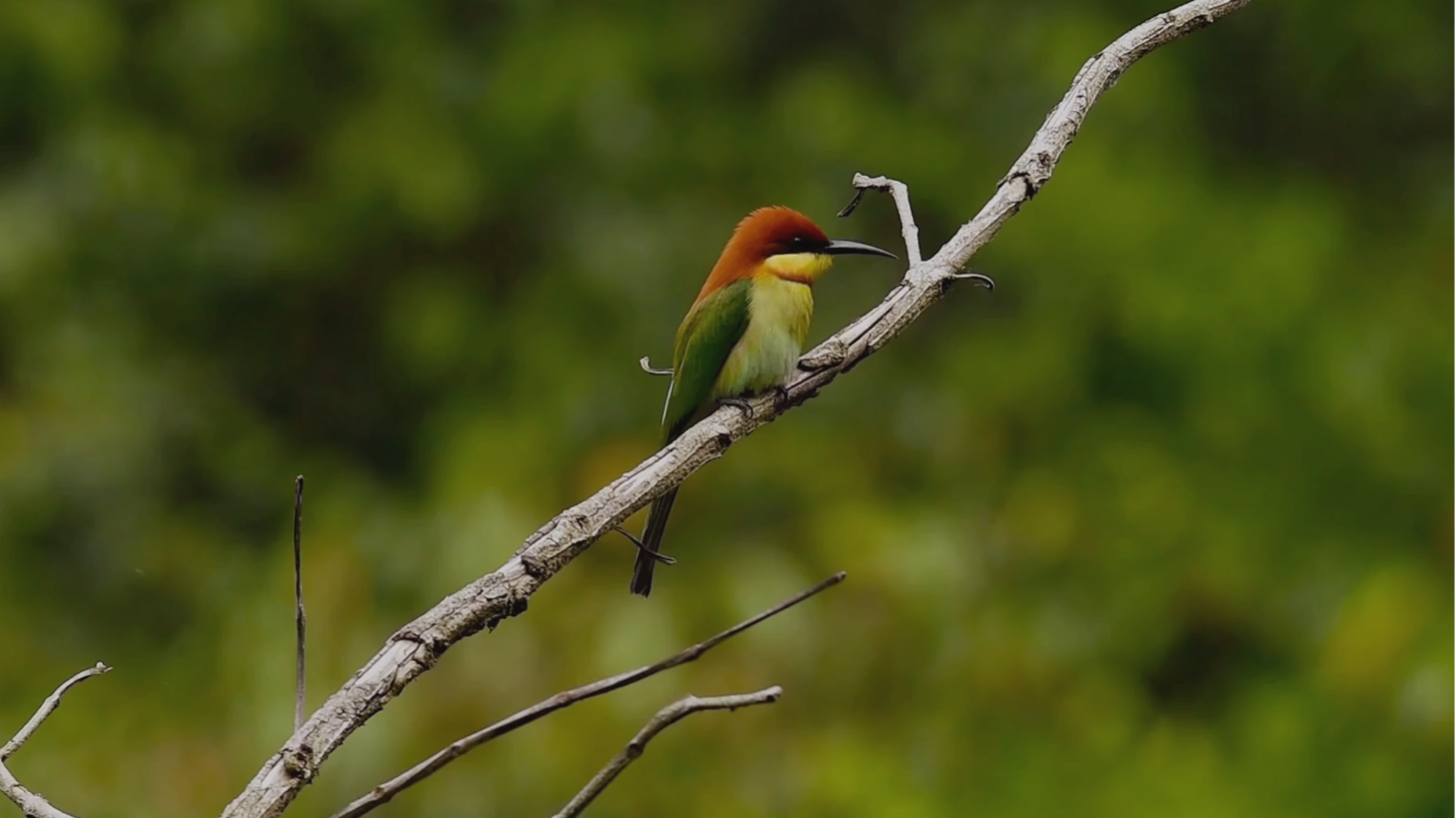
The Earth BioGenome Project (EBP) is a global effort to sequence, catalog, and characterize the genomes of all known eukaryotic species. Since its launch in 2018, the EBP has established an international network of initiatives that, collectively, have generated genome assemblies for more than 5,600 species, with more than 4,000 meeting reference-quality standards. These advances—representing a substantial fraction of the world’s high-quality genome output—have been driven by rapid adoption of shared standards and coordinated global collaboration.
This presentation will highlight recent scientific and technical progress of the EBP, including advances in genome assembly, annotation, and data integration across the eukaryotic Tree of Life. The project’s Phase I goal of producing reference genomes for 10,000 species, representing at least half of all eukaryotic families, is now within reach. Achieving the more ambitious Phase II target of 150,000 genomes will require substantial scaling up of current sequencing and analytical capacity, as well as continued international coordination.
Beyond scale, EBP is transforming our understanding of genome structure and evolution. Chromosome-level assemblies now provide the resolution needed to reconstruct the evolutionary history of genomes across deep time. In mammals, these data have revealed the origins of chromosome number and organization, gene gain and loss, repetitive element dynamics, and higher-order genome structure over approximately 200 million years of evolution.
Equally important, EBP is creating a foundational resource for addressing some of the most pressing challenges of our time. High-quality reference genomes enable more precise conservation strategies by identifying genetic diversity, inbreeding, and adaptive potential in threatened species. They also provide critical infrastructure for the emerging bioeconomy, supporting advances in biotechnology, agriculture, and sustainable resource management. In addition, comprehensive genomic knowledge across species enhances the ability to detect, monitor, and respond to biological threats, contributing to global biodefense and biosurveillance efforts.
The Earth BioGenome Project is creating a foundational genomic resource for life on Earth—transforming how we study, protect, and sustainably use biodiversity, while enhancing capabilities in biodefense and biosurveillance for future generations.
Selected Reading References:
Earth BioGenome Project: Sequencing life for the future of life. https://pubmed.ncbi.nlm.nih.gov/29686065/
The Earth BioGenome Project 2020: Starting the clock. https://pubmed.ncbi.nlm.nih.gov/35042800/
Why sequence all eukaryotes? https://pubmed.ncbi.nlm.nih.gov/35042801/
The Earth BioGenome Project Phase II: illuminating the eukaryotic tree of life. https://pmc.ncbi.nlm.nih.gov/articles/PMC7618684/
Ethical, legal, and social issues in the Earth BioGenome Project. https://pubmed.ncbi.nlm.nih.gov/35042809/
About the Speaker

Harris A. Lewin is chair of the Earth BioGenome Project, an international consortium building high-quality reference genomes for all known eukaryotic species, and Research Professor in the Julie Ann Wrigley Global Futures Laboratory at Arizona State University. Previously, he was Distinguished Professor of Evolution and Ecology and Vice Chancellor for Research at the University of California, Davis. And, before joining UC Davis, he held endowed chairs and directed genomics centers at the University of Illinois at Urbana–Champaign.
Harris’s research focuses on genomics, mammalian genome evolution, comparative genomics, and immunogenetics. His work examines chromosome structure, genome organization, and the genetic basis of adaptation, speciation, and disease. He is particularly known for advancing comparative genomics approaches that link genome architecture to evolutionary processes. In recent years, he has concentrated on biodiversity genomics and global genome sequencing initiatives.
Among other significant work, Harris played a central role in sequencing and analyzing the cattle genome, helping to identify genes of agricultural and biological importance, and advancing understanding of mammalian genome structure. His research has clarified large-scale chromosomal rearrangements across species and their implications for evolution and disease.
Harris is an author on more than 400 peer-reviewed scientific publications spanning genomics, evolutionary biology, and biodiversity research, and he has contributed to many edited volumes and scientific reviews on genomics research.
Among other honors and awards, Harris is a member of the National Academy of Sciences, a Fellow of the American Association for the Advancement of Science, and he was awarded the Wolf Prize in Agriculture for advances in cattle genomics and contributions to animal genetics.
He earned a BS in Animal Science and an MS in Animal Breeding and Genetics at Cornell University, and a PhD in Immunology at UC – Davis.
Social Media
LinkedIn – Earth BioGenome Project
Instagram – @earthbiogenome
X – Earth BioGenome Project
BlueSky – Earth BioGenome Project
YouTube – @earthbiogenomeproject2039
Website – www.earthbiogenome.org
Linktree – https://linktr.ee/earthbiogenomeproject
Minutes
On April 24, 2026, Members of the Society and guests joined the speaker for a reception and dinner at 5:45 PM in the Members’ Dining Room at the Cosmos Club. Thereafter they joined other attendees in the Powell Auditorium for the lecture proceedings. In the Powell Auditorium of the Cosmos Club in Washington, D.C., President Larry Millstein called the lecture portion of the 2,535th meeting of the Society to order at 8:01 p.m. ET. He began by welcoming attendees, thanking sponsors for their support, announcing new members, and inviting guests to join the society. Scott Mathews then read the minutes of the previous meeting which included the lecture by Kelly Fast, titled “Finding Asteroids Before They Find Us”. The minutes were approved pending a minor correction.
President Millstein then introduced the speaker for the evening, Harris Lewin, of Arizona State University. His lecture was titled “The Earth BioGenome Project: Reading the Library of Life”.
The speaker began by describing the Earth BioGenome Project (or EBP) as a global scientific moonshot with the ambitious objective of sequencing, cataloging, and characterizing the genomes of approximately 1.6 million known eukaryotic species, within the next 10 years. He said that this initiative is not merely a cataloging exercise, but a foundational effort to establish the critical genomic infrastructure necessary to support global conservation, advance the bioeconomy, and enhance international biodefense and biosurveillance capabilities.
The speaker provided a comprehensive update on the strategic phases and technical progress of the EBP. He reported that the project is currently executing Phase I, which targets the sequencing of approximately 10,000 species. This phase aims to produce high-quality, reference genomes representing at least half of all known eukaryotic families. Lewin indicated that this milestone is within operational reach.
The speaker outlined Phase II, which will expand sequencing, computational pipelines, and analytical capacity across international facilities to encompass roughly 150,000 species. Lewin claimed that the project has successfully sequenced over 5,600 genomes to date. More than 4,000 of these sequences meet rigorous, reference-quality assembly standards, demonstrating the project's commitment to high-fidelity data.
Lewin detailed the core technical impacts and broad scientific utility derived from the EBP's outputs. He emphasized that the project's focus on chromosome-level assemblies provides deep temporal resolution, enabling researchers to reconstruct genomic history, track chromosomal rearrangements, and analyze genome structure across approximately 200 million years of evolutionary history.
The speaker discussed the practical applications of this data. For conservation biology, these high-quality reference genomes are vital for precise action, allowing scientists to assess genetic diversity, monitor inbreeding metrics, and understand the adaptive capacities of threatened species. He said that biodiversity and species conservation are critical to “essential ecosystem services”, such as food, medicines, raw materials, clean water, clean air, climate regulation, and recreation. Lewin said that biodiversity underpins the $4-trillion bioeconomy.
From a strategic and security perspective, he underscored the fact that comprehensive genomic data significantly enhances international capacity to detect, track, and mitigate biological threats, and thereby enables global biosurveillance.
The speaker discussed the way in which advancing technology has exponentially decreased the cost of genomic sequencing, while simultaneously increasing the speed of processing. For example, the technique of “sequencing by synthesis”, which allows clonal amplification of DNA fragments with distinct fluorescent colors, reduced the cost of sequencing by approximately three orders of magnitude between 2007 and 2009.
The speaker ended his talk by showing how DNA sequencing can be used to map vertebrate phylogeny back approximately 560 million years, tracing the evolution of several modern species to their common ancestor.
The lecture was followed by a Question and Answer session.
A member on the livestream asked if EBP was concerned only with mapping the base pairs that code for genes, and what was the importance of mapping the non-coding regions. Lewin responded that EBP is mapping the entire genome, not just the genes. He said that a wide variety of techniques would be used for gene sequence annotations (the process of identifying and attaching biological information to a raw DNA sequence, and thereby mapping the functions and structures associated with a specific sequence).
A guest asked if researchers are now re-thinking the ideas of taxonomy, given the new genomic data produced by EBP, and if so, what are the guiding principles. Lewin responded that genomics is being used to improve taxonomy, giving the example of an organism being recently reclassified to a completely different genus. He said “Species are being reclassified all the time, even mammals.”
A member asked why many simpler organisms had large, complicated genomes, while more complicated species had smaller genomes. Was there some form of “gene optimization” occurring? Lewin responded that complexity does not correlate with genome size. The large size of some genomes is due, primarily, to repetitive elements or transposons. He said “We don’t know [why], evolution is just a tinkerer.” He said that at some point, the repetitive sequences must have provided some evolutionary advantage.
After the question and answer period, President Millstein thanked the speaker and presented him with a PSW rosette, a signed copy of the announcement of his talk, and a signed copy of Volume 17 of the PSW Bulletin. He then announced speakers of up-coming lectures and made a number of housekeeping announcements. He adjourned the 2,535th meeting of the society at 10:02 pm ET.
Temperature in Washington, DC: 18.3° Celsius
Weather: Mostly Cloudy
Dinner attendance: 35
Lecture attendance:
In person: 75
Live Stream: 42
For a total of 117 viewers
Views of the video in the first two weeks: 309
Respectfully submitted,
Scott Mathews, Recording Secretary