The 95th Joseph Henry Lecture
Agentic AI and the Search for Extraterrestrial Life
The SETI-NVIDIA Collaboration at the Allen Telescope Array
Michael Garrett (U. of Manchester) & Adam Thompson (NVIDIA)
Michael Garrett
Sir Bernard Lovell Chair of Astrophysics
University of Manchester
Chair, SETI Permanent Committee of the International Academy of Astronautics
Adam Thompson
Head of Product - Edge Supercomputing
NVIDIA
In Memory of PSW Science Member Dick Garwin
About the Lecture
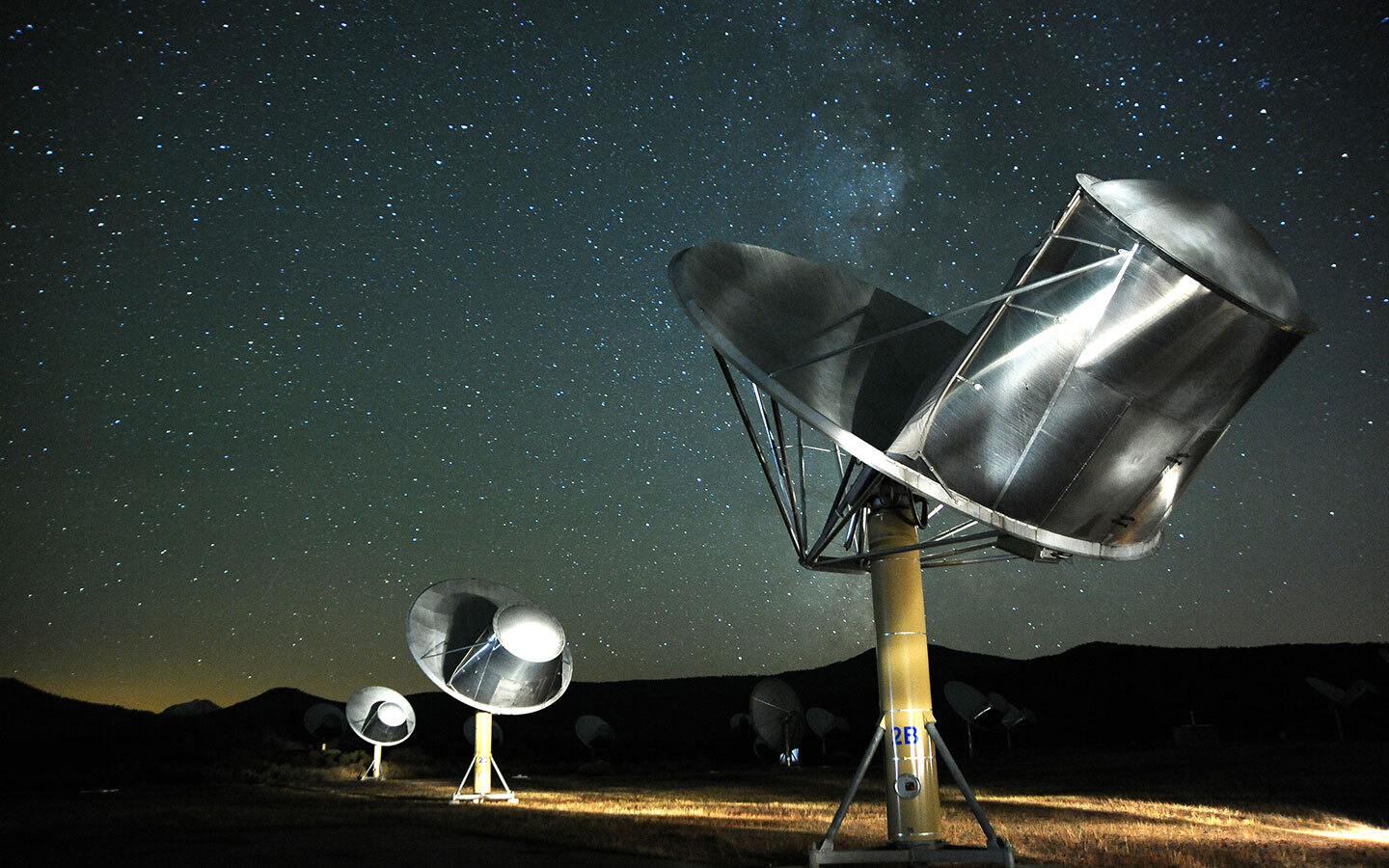
For millennia, humanity has looked to the stars and asked, “Are we alone?” Today, motivated acutely by exciting discoveries across astronomy, the Search for Extraterrestrial Intelligence (SETI) has transformed this profound philosophical question into a rigorous, data-driven observational science. As we survey the cosmos for technosignatures—remotely detectable indicators of advanced technology beyond Earth—our observational scope is expanding exponentially, from upgraded facilities like the Hat Creek Radio Observatory, the Very Large Array (VLA), and MeerKAT in South Africa, to next-generation giants like the Square Kilometre Array (SKA) and ngVLA. These efforts culminate in conceptual missions to the lunar farside, where the Moon will shield our instruments from terrestrial radio interference.
However, the sheer scale of the universe presents an unprecedented data challenge. The cosmos is vast, and the radio spectrum is incredibly dense. Isolating a faint, engineered anomaly from a background of cosmic noise and terrestrial interference presents profound challenges. Modern radio astronomy instrumentation generates staggering volumes of raw data, demanding real-time, high-speed anomaly detection across billions of frequency channels simultaneously.
The bottleneck in modern astrophysics is no longer exclusively our ability to collect photons and radio waves; it is our capacity to process them. To push the boundaries of the search for technosignatures, we are fundamentally rethinking our approach to signal processing, observatory operations and ultimately observational astronomy.
Additional Information
https://blogs.nvidia.com/blog/seti-institute-ai-fast-radio-bursts/
https://www.aanda.org/10.1051/0004-6361/202555217
About the Speaker
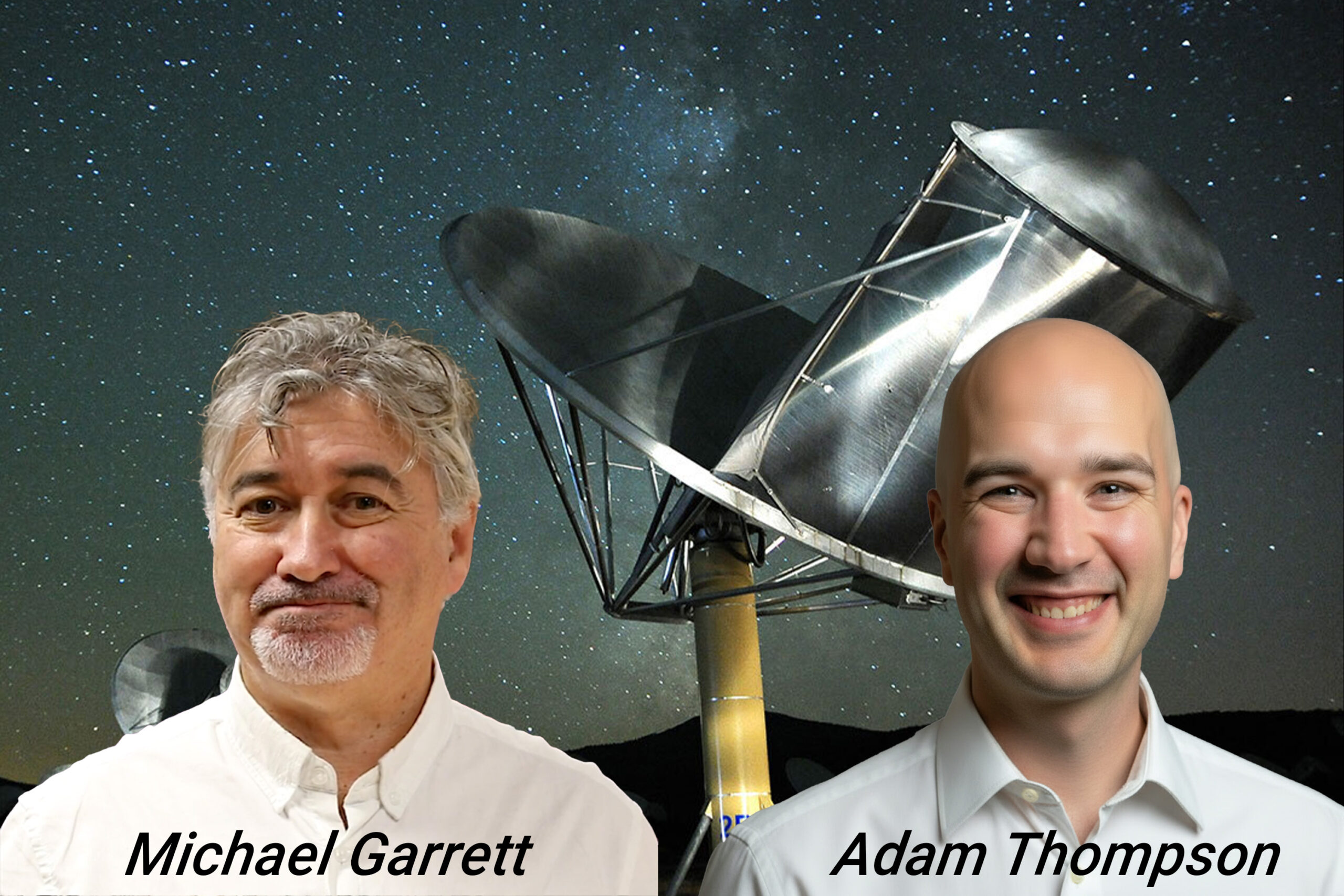
Michael Garrett
Michael (Mike) Garrett is the inaugural Sir Bernard Lovell Chair of Astrophysics at the University of Manchester. He is the Chair of the SETI Permanent Committee of the International Academy of Astronautics and is a Visiting Professor at Leiden University. In addition, he is chair of the International Academy of Astronautics (IAA) SETI Committee and serves on the scientific advisory boards of both the SETI Institute and Breakthrough Listen. Previously Mike was Director of Jodrell Bank Centre for Astrophysics, General and Scientific Director of the National Institute for Radio Astronomy in the Netherlands (ASTRON) and Director of the Joint Institute for Very Long Baseline Interferometry (VLBI) in Europe.
Mike developed the technique of wide-field Very Long Baseline Interferometry and spearheaded the roll-out of real-time VLBI (e-VLBI) across the European VLBI Network and beyond. He was instrumental in finalizing the original design concept for the Square Kilometre Array (SKA) telescope. While his scientific interests in astrophysics are eclectic, his main scientific focus currently is in searching for anomalies in large astronomical data sets.
Among other honors and awards received, Mike is an elected Fellow of the Royal Society, and he has served on many international scientific committees and advisory groups.
He earned a BS in Astronomy at the University of Glasgow and a PhD in Radio Astronomy at the University of Manchester.
LinkedIn Profile: https://www.linkedin.com/in/prof-michael-a-garrett/
Adam Thompson
Adam Thompson is Head of Product for Edge Supercomputing at NVIDIA. In that role, he works at the intersection of GPU computing, real-time sensor pipelines, and AI-ready scientific and industrial systems.
Adam’s technical focus is edge and high-performance computing for real-time AI, signal processing, smart sensors, and high-speed sensor I/O connected to GPU-accelerated compute, applications of deep learning to RF data, data compression, and collaborative edge-to-cloud or edge-to-datacenter workflows. More recent work emphasizes digital twins of instruments, online AI training and fine-tuning, and streaming scientific data pipelines.
Adam is best known for helping build GPU-based platforms for real-time scientific and sensor computing and for creating cuSignal, a GPU-accelerated signal-processing library written in Python widely used in sensor-processing communities integrated in CuPy. Recently he has worked to enable real-time AI pipelines for scientific instruments and collaborations linked to radio astronomy and the Allen Telescope Array.
Adam earned a BS in Electrical Engineering at Clemson University and an MS in Electrical and Computer Engineering at the Georgia Institute of Technology.
LinkedIn Profile: https://www.linkedin.com/in/awthomp/
Minutes
On May 29, 2026, Members of the Society and guests joined the speaker for a reception and dinner at 5:45 PM in the Members’ Dining Room at the Cosmos Club. Thereafter they joined other attendees in the Powell Auditorium for the lecture proceedings. In the Powell Auditorium of the Cosmos Club in Washington, D.C., President Larry Millstein called the lecture portion of the 2,536th meeting of the Society and the 95th Joseph Henry lecture to order at 8:08 p.m. ET. He began by welcoming attendees, thanking sponsors for their support, announcing new members, and inviting guests to join the society. Scott Mathews then read the minutes of the previous meeting which included the lecture by Harris Lewin, titled “The Earth BioGenome Project: Reading the Library of Life”. The minutes were approved as read.
President Millstein then introduced the speakers for the evening, Michael Garrett, of the University of Manchester, and Adam Thompson, of NVIDIA. Their lecture was titled “Agentic AI and the Search for Extraterrestrial Life”.
The first speaker was Michael Garrett, whose portion of the lecture focused on the astrophysical foundations of the Search for Extraterrestrial Intelligence (or SETI). Garret began by saying that SETI was looking for “technosignatures”; anomalies in astronomical data that might be the telltale signs of intelligence in the Universe. He outlined how SETI has transitioned from a philosophical pursuit into a rigorous, data-driven observational science, highlighting how the scale of next-generation radio telescopes create a critical need for advanced AI. He said that the massive datasets produced by these instruments will require new technologies and new techniques in order to detect technosignatures. He said that this transformation was largely driven by the explosive growth in exoplanet discoveries over the last two decades, confirming that planets are ubiquitous in our galaxy, and many reside in the "habitable zone" of their host stars.
Garrett gave specific examples of the types of technosignatures SETI is searching for, now and in the near future. These included: Narrow-band radio transmissions (the traditional focus of SETI), Optical or Laser Pulses (brief, intense flashes of light used for interstellar communication or propulsion), Megastructures (Anomalous transits or thermal signatures that could indicate massive engineering projects like Dyson spheres), and Broad-band radio “leakage” (aggregate radio emissions resulting from a large number of devices, operating over a wide range of frequencies). He introduced the acronym BRaT, for broadband radio technosignatures. He emphasized the need for AI in identifying BRaT’s, distinguishing them from the background of billions of confounding, faint, radio sources in the Universe.
To find these elusive signatures, Garrett detailed the astronomical community's roadmap for scaling up its observational power. He categorized the hardware evolution into three phases: current upgrades (e.g. the Allen Telescope Array, the Very Large Array, and the MeerKAT Radio Telescope), next-generation radio telescopes (e.g. the Square Kilometer Array, and the Next-Generation Very Large Array), and future concepts, like Lunar Farside Observatories.
Garrett ended his portion of the lecture by quoting Frank Drake, saying “At this very minute, with almost absolute certainty, radio waves sent forth by other intelligent civilizations are falling on the Earth.”
The second portion of the lecture was presented by Adam Thompson, who focused on the computational architecture required to solve the exabyte-scale data bottleneck in modern radio astronomy. He explained how NVIDIA and the SETI Institute are utilizing Edge Supercomputing and Agentic AI, directly at the sensor source, to bypass bandwidth limitations, perform real-time signal processing, and autonomously isolate technosignatures from background noise.
Thompson said that the digitization of analog RF signals creates data streams at rates of hundreds of gigabits or even terabits per second. He said that it is economically and physically impossible to pipe this raw data over standard networks to centralized servers for analysis. Rather than moving the data to the compute, the compute must be moved to the data. This requires deploying high-performance computing clusters directly at the observatory, or “on the edge."
Thompson outlined the strategy of applying Edge Supercomputing: streaming data directly into GPU’s, bypassing the CPU’s, processing datasets immediately upon generation, discarding the noise and forwarding only the relevant anomalies, reducing the required bandwidth by orders of magnitude. He discussed the hardware associated with this type of edge-computing, including: DSP’s (digital signal processors), GPU’s (graphics processing units), and FPGA’s (field programmable gate arrays). He described some of the algorithms or operations performed by such hardware, including: fast Fourier transforms, polyphase filtering, real-time RF interference mitigation, and anomaly detection. Thompson highlighted some of the advantages of shifting these workloads to GPU’s. These included: highly flexible, software defined processing, rapid deployment of algorithms, dynamic scaling, massive bandwidths, and the integration of AI models and signal processing on the same devices.
Thompson said that because SETI is searching for the unknown, traditional machine learning is insufficient, because it requires labeled training data. Thompson explained that Agentic AI in this application allows for unsupervised anomaly detection, dynamic noise suppression, and autonomous telescope operation. If an anomalous signal is detected, the AI can immediately command the telescope to dwell on the source and track it in real time.
Thompson ended his portion of the lecture by saying that “…NVIDIA is a platform company. We make tools that other people can build on top of, and then use for their own science.”
The lecture was followed by a Question and Answer session.
A member asked about the impact of AI on the training and education of young people in this field. Garrett responded that he sees many students using AI on a regular basis, and that he was “…a little worried about that.” He said that while he thinks AI is a fantastic tool, dramatically increasing his productivity, he wonders whether younger people will build-up the experience and familiarity with data on a deep level.
A member on the live stream asked if a more advanced civilization, sending radio signals to Earth, could compensate for or change the Doppler shift of the transmitted signal. Garrett responded that other civilizations could be thousands of years ahead of us in technology, and that as a result, the AI’s looking for technosignatures must be open to detecting anomalies that we would not expect.
A member asked about “model collapse”, the idea that AI generated data is fed back into an AI as training data, ultimately causing the model to “generate gibberish”. Thompson responded that NVIDIA seeks to “connect world class models to world class instruments”. He said that he does not have the experience to discuss what happens when AI goes wrong. Garrett responded that astronomy deals with dynamic datasets: the sky is constantly changing. He said that this ensures that AI models are constantly changing and evolving, and are therefore less susceptible to “degeneration”.
A guest asked about the possibility of transferring specific algorithms or processes from the GPU’s to other hardware, like FPGA’s. Thompson responded “…the most realistic and probably best systems are heterogeneous compute”, meaning that some combination of GPU’s with CPU’s and FPGA’s will likely be required. He gave the example of an agentic AI in high energy particle physics that requires nanosecond latency, saying that GPU’s are currently not capable of such speeds, but FPGA’s are.
After the question and answer period, President Millstein thanked the speakers and presented them with PSW rosettes, signed copies of the announcement of their talk, and signed copies of Volume 17 of the PSW Bulletin. He then announced speakers of up-coming lectures and made a number of housekeeping announcements. He adjourned the 2,536th meeting of the society at 10:22 pm ET.
Temperature in Washington, DC: 22.8° Celsius
Weather: Fair
Dinner attendance: 74
Lecture attendance:
In person: 126
Live Stream: 40
For a total of 166 viewers
Views of the video in the first two weeks: 330
Respectfully submitted, Scott Mathews: Recording Secretary