Heroic Engineering: The James Webb Space Telescope
And Lessons Learned for Future Flagship Missions
Jonathan W. Arenberg
Northrop Grumman Fellow
Chief Mission Architect for Science and Robotic Exploration
Northrop Grumman
Sponsored by PSW Science Member AC Charania
About the Lecture
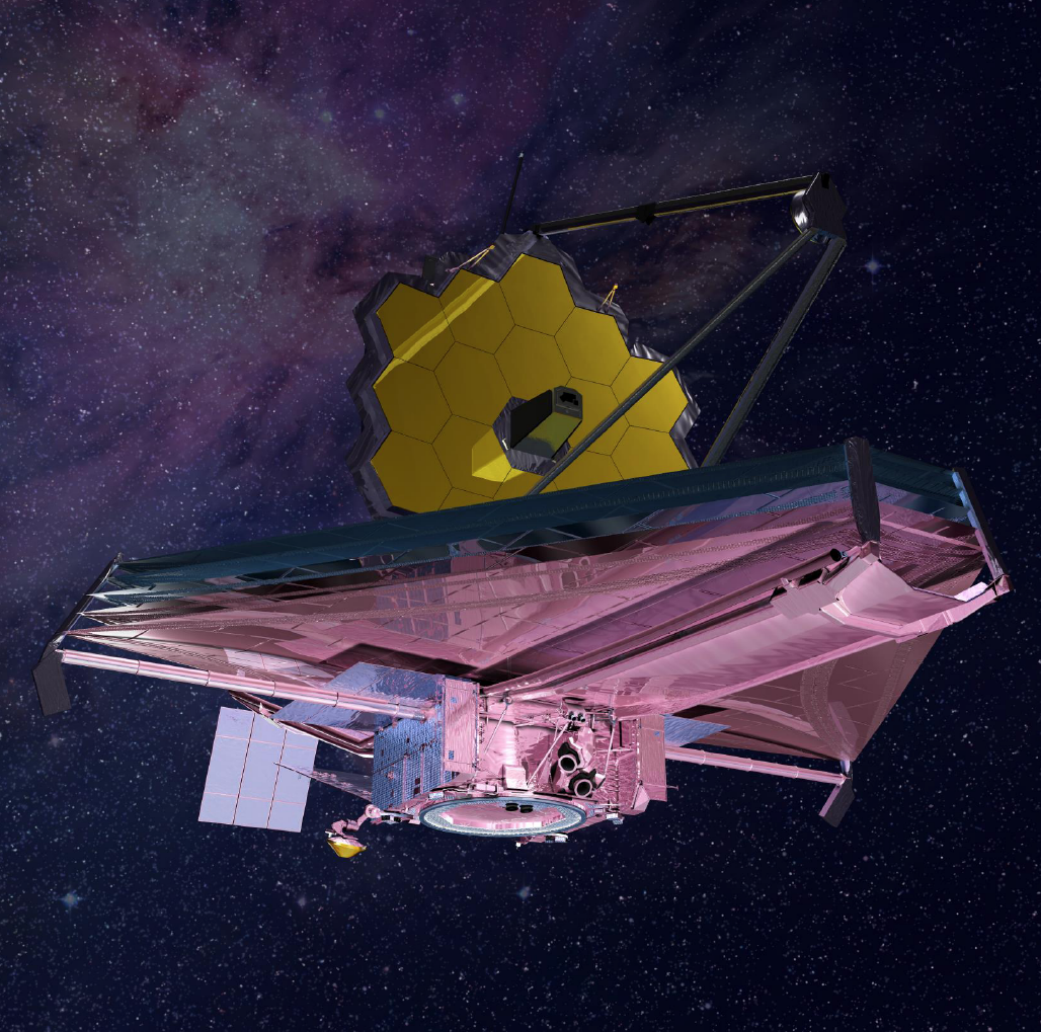
The result of nearly 100 million people hours of effort over several decades, NASA’s James Webb Space Telescope is the largest observatory operating in space and an epic engineering story. To bring the Webb mission to life took the efforts of three space agencies, hundreds of scientific organizations, and nearly a thousand companies on three continents.
This lecture will discuss the origins of the mission, which stretches back to the 1980’s, long before the launch of the Hubble Space Telescope. Webb’s science missions will be discussed and connected to the mission requirements, cryogenic operation, and a primary mirror larger than the rocket’s fairing.
Taken in aggregate, the mission requirements called for a revolutionary approach to the design and implementation of space observatories. The key revolutionary aspects of the technology, systems architecture and engineering that Webb’s mission demanded, will be introduced and explored. The lecture will also explore some of the challenges faced by the development team along the way. The central role that modeling and simulation played in the design and approach to verification will be highlighted.
This talk will also show some of the stunning images and early science results from this groundbreaking observatory.
And it will conclude with a discussion of some of the speaker’s major lessons learned from Webb’s development and implementation, and generalize them for the development of future complex development efforts.
Reading & Media References
1. The James Webb Space Telescope Mission, Jonathan P. Gardner et al 2023 PASP 135 068001DOI 10.1088/1538-3873/acd1b5
2. Jonathan W. Arenberg, Tiffany Glassman, Elysia Starr, et al. “Designing a new, large, complex observatory: learning the strategic lesson of newness from our experience on the James Webb Space Telescope,” Journal of Astronomical Telescopes, Instruments, and Systems 10(1), 011209 (14 Mar 2024); https://doi.org/10.1117/1.JATIS.10.1.011209
3. Pierre Y. Bely, Garth D. Illingworth, Jonathan W. Arenberg, et al. “Genesis of the James Webb Space Telescope architecture: the designers’ story,” Journal of Astronomical Telescopes, Instruments, and Systems 11(3), 030901 (1 Jul 2025); https://doi.org/10.1117/1.JATIS.11.3.030901
4. Paul A. Lightsey, Charles B. Atkinson, Mark C. Clampin, et al. “James Webb Space Telescope: large deployable cryogenic telescope in space,” Optical Engineering 51(1), 011003 (3 Feb 2012); https://doi.org/10.1117/1.OE.51.1.011003
5. Charlie Atkinson, Jonathan Arenberg, Gary Matthews, et al. “Architecting a revised optical test approach for JWST”, Proc. SPIE 7010, Space Telescopes and Instrumentation 2008: Optical, Infrared, and Millimeter, 70100Q (12 Jul 2008); https://doi.org/10.1117/12.788021
6. Charles Atkinson, Jonathan Arenberg, Larry Gilman, et al. “Technology demonstration of large stable cryogenic composite structures for JWST”, Proc. SPIE 6687, UV/Optical/IR Space Telescopes: Innovative Technologies and Concepts III, 668703 (12 Sept 2007); https://doi.org/10.1117/12.734753
7. Charles B. Atkinson, Pat Harrison, Gary Matthews, et al. “Integration and verification of the James Webb Space Telescope”, Proc. SPIE 5180, Optical Manufacturing and Testing V, null (22 Dec 2003); https://doi.org/10.1117/12.506410
8. Jonathan W. Arenberg, John M. O’Meara, Paul H. Geithner “Special Section Guest Editorial: Lessons Learned from the James Webb Space Telescope Program,” Journal of Astronomical Telescopes, Instruments, and Systems 10(1), 011201 (29 Mar 2024); https://doi.org/10.1117/1.JATIS.10.1.011201
9. Jonathan W. Arenberg, Joshua Adamson, George Harpole, et al. “Determination of emissivities of key thermo-optical surfaces on the James Webb Space Telescope”, Proc. SPIE 9143, Space Telescopes and Instrumentation 2014: Optical, Infrared, and Millimeter Wave, 91433Q (28 Aug 2014); https://doi.org/10.1117/12.2055514
10. J. Arenberg, J. Adamson, G. Harpole, et al. “Radiance from an ice contaminated surface”, Proc. SPIE 9904, Space Telescopes and Instrumentation 2016: Optical, Infrared, and Millimeter Wave, 99046G (9 Aug 2016); https://doi.org/10.1117/12.2234487
11. Lee Feinberg, Jonathan Arenberg, Dave Yanatsis, et al. “Breaking the cost curve: applying lessons learned from the James Webb space telescope development”, Proc. SPIE 10698, Space Telescopes and Instrumentation 2018: Optical, Infrared, and Millimeter Wave, 1069823 (6 Jul 2018); https://doi.org/10.1117/12.2309661
12. Jonathan Arenberg “Calculation of the effect of ice on the transmission of the James Webb Space Telescope”, Proc. SPIE 6692, Cryogenic Optical Systems and Instruments XII, 66920S (17 Sept 2007); https://doi.org/10.1117/12.736281


About the Speaker

Jonathan Arenberg is a Northrop Grumman Fellow and Chief Mission Architect for Science and Robotic Exploration at Northrop Grumman Space Systems. In that role, he leads engineering and concept development for future science missions and develops, plans, and conducts strategic analyses for space science missions across all disciplines. He was responsible for directing Northrop Grumman’s studies of potential successor missions to NASA’s James Webb Space Telescope (JWST) as part of the recent astrophysics decadal review and Astrophysics Probe Explorer proposals. Previously, he served as chief engineer for Space Science Missions at Northrop Grumman, and as systems engineering manager and chief engineer for technology development on the James Webb Space Telescope (JWST). His other JWST positions included structural technology test lead, system design leader, and systems engineering deputy.
Jon’s work focuses on the development of missions, systems, and technologies for astronomy from space. He has more than 35 years of experience working on astronomical programs, including the Chandra X-ray Observatory, development of the starshade, and JWST. His technical experience includes optical systems from X-rays through terahertz wavelengths, laser systems and components, metrology, optical testing, and technical standards. He is a member of US national and international standards committees related to lasers and electro-optics. He contributed to studies of AXIS, HEX-P, SALTUS, Arcus, Lynx, Origins, LUVOIR, and HabEx with a Starshade. He co-invented the Starshade concept for directly imaging exoplanets. Currently he is working on technology and architecture for the Habitable Worlds Observatory and several other missions.
Jon is an author on over 270 conference presentations, papers, and book chapters and of the book Systems Engineering for Astronomical Telescopes, co-authored with Paul Lightsey. He is a frequent public speaker, colloquium and guest lecturer, a referee for several journals, a guest editor for special journal issues on laser engineering and astronomical topics, and a short-course instructor. He holds 15 US and European patents covering a wide range of technologies.
Among other honors and awards, Jon is an Associate Fellow of AIAA. He is also a Fellow of SPIE. In addition, he received the UCLA Samueli Professional Achievement Award. He was the speaker at the UCLA Engineering graduate commencement in 2022.
He earned a BS in Physics and an MS and PhD in engineering at UCLA.
More Information About the Speaker
• American Astronomical Society: Jonathan Arenberg candidate profile (2026)
• AIAA Los Angeles Section: speaker biography (2026)
• UC Santa Barbara Materials Department: speaker biography (2026)
• UCLA Samueli School of Engineering: Professional Achievement Award profile
• AIAA: Class of 2024 Associate Fellows
• SPIE Digital Library: Systems Engineering for Astronomical Telescopes
Minutes
On September 11, 2026, Members of the Society and guests joined the speaker for a reception and dinner at 5:45 PM in the Members’ Dining Room at the Cosmos Club. Thereafter they joined other attendees in the Powell Auditorium for the lecture proceedings. In the Powell Auditorium of the Cosmos Club in Washington, D.C., President Larry Millstein called the lecture portion of the 2,540th meeting of the Society to order at 8:04 p.m. ET. He began by welcoming attendees, thanking sponsors for their support, announcing new members, and inviting guests to join the society. Scott Mathews then read the minutes of the previous meeting which included the lecture by Douglas Wallace, titled “Mitochondria and Their Roles in Health and Disease”. The minutes were approved pending a minor correction.
President Millstein then introduced the speaker for the evening, Jonathan Arenberg, of Northrop Grumman. His lecture was titled “Heroic Engineering of the James Webb Space Telescope: Lessons Learned for Future Flagship Missions”.
The speaker began by characterizing the James Webb Space Telescope (JWST) as an unprecedented achievement in aerospace engineering, requiring nearly 100 million person-hours of effort over several decades. He emphasized that the mission's realization was only possible through a massive international coalition comprising three space agencies: NASA, the European Space Agency, and the Canadian Space Agency, alongside hundreds of academic and scientific institutions and nearly a thousand industrial partners spanning three continents. Arenberg recounted the early conceptual origins of the mission, which could be traced back to the “Next Generation Space Telescope Report” in 1989.
Arenberg explained the primary scientific objectives of the observatory, including: First light & reionization, the assembly of galaxies, the birth of stars & protoplanetary systems, and planetary systems & the origins of life. He said that these objectives strictly dictated JWST’s physical and optical architecture. Because the cosmological expansion of the universe shifts light from distant objects into the infrared, JWST was required to be an infrared-optimized observatory. Observing in the infrared portion of the spectrum dictated that the telescope assembly and instruments operate at cryogenic temperatures to prevent the observatory’s own thermal glow from overwhelming astronomical signals. The near-infrared instruments (0.6-5.0 um) operate below 50 Kelvin and the mid-infrared instrument (5.6-25.5 um) operate below 7 Kelvin.
The speaker discussed the design of the sunshield: five layers of Kapton roughly the size of a tennis court. The sunshield provides passive cooling by maintaining a temperature differential of over 300 Kelvin between the sun-facing side and the cold science instruments. Arenberg described the severe spatial constraints imposed by the launch vehicle, the Ariane 5. Because the required 6.5-meter diameter primary mirror exceeded the approximately 4.5-meter usable envelope of the Ariane 5, engineers designed a deployable primary mirror composed of 18 hexagonal segments made of beryllium, a material selected for its extreme stiffness, lightweight properties, and dimensional stability at cryogenic temperatures. The beryllium segments were coated with a microscopically thin layer of gold to maximize infrared reflectivity.
Arenberg discussed the critical technological breakthroughs required to make the architecture viable. He highlighted the development of actuators behind each mirror segment, providing six degrees of rigid-body motion and radius-of-curvature adjustment with nanometer-scale precision. He explained the implementation of wavefront sensing and control algorithms, which use starlight gathered by the science instruments to phase the individual segments into a single, continuous optical surface. The speaker also highlighted the closed-cycle helium loop cryocooler designed to actively cool the MIRI instrument without expending consumable cryogens.
The speaker then focused on the unique systems engineering and verification challenges inherent in building a system of such complexity. Arenberg highlighted the fact that the team had to rely heavily on rigorous modeling and simulation. High-fidelity structural, thermal, and optical models were developed and validated by extensive testing of subscale models and individual components.
Arenberg showed a series of images and videos, showing portions of the construction, testing, assembly, ground-based deployment, shipment, and finally the launch of JWST on Christmas morning 2021, from ESA’s Spaceport in French Guiana. He showed animations of the 50 deployable structures, successfully deployed over a 14-day period, as JWST made its way to L2, the second Lagrange point.
Arenberg presented early optical alignment results and science imagery, demonstrating that Webb’s optical performance exceeded its pre-launch specifications. He compared several images from JWST with images from Hubble, demonstrating the increased resolution and sensitivity of Webb.
He concluded by synthesizing the major engineering lessons learned, emphasizing that future missions, such as the Habitable Worlds Observatory, must prioritize early investments in critical technologies, integrate rigorous modeling disciplines, and cultivate open organizational communication.
The lecture was followed by a Question and Answer session.
A member asked about the failure risks during the deployment sequence and whether any unexpected anomalies occurred while tensioning the sunshield. Arenberg responded that while the sunshield deployment was historically considered one of the highest-risk phases, it showed exceptionally smooth on-orbit deployment with tension profiles matching predictive models closely.
A member on the livestream asked how the project was funded, and could it happen today. Arenberg responded that JWST was primarily funded from the NASA budget, and that similar projects are being funded today. He specifically mentioned the Habitable Worlds Observatory, which is currently receiving initial funding.
A guest asked what determined the projected lifetime of the detectors on JWST. Arenberg responded that the limiting cases for the lifetime of the entire system were electrical power and fuel (or propellant). He said that all photovoltaic systems show some degradation over time, and that would set the upper limit on useable electric power. He said that JWST uses propellant for course correction and precision repointing.
After the question and answer period, President Millstein thanked the speaker and presented him with a PSW rosette, a signed copy of the announcement of his talk, and a signed copy of Volume 17 of the PSW Bulletin. He then announced speakers of upcoming lectures and made a number of housekeeping announcements. He adjourned the 2,540th meeting of the society at 10:09 pm ET.
Temperature in Washington, DC: 23.9° Celsius
Weather: Passing Clouds
Dinner attendance: 52
Lecture attendance: In person: 107 Live Stream: 45 For a total of 152 viewers
Views of the video in the first two weeks: 1,254
Respectfully submitted,
Scott Mathews: Recording Secretary