Early Human Evolution
Understanding its Roots in Africa
W. Andrew Barr
Associate Professor of Anthropology
Center for the Advanced Study of Human Paleobiology
George Washington University
Sponsored by an Anonymous PSW Science Member
About the Lecture
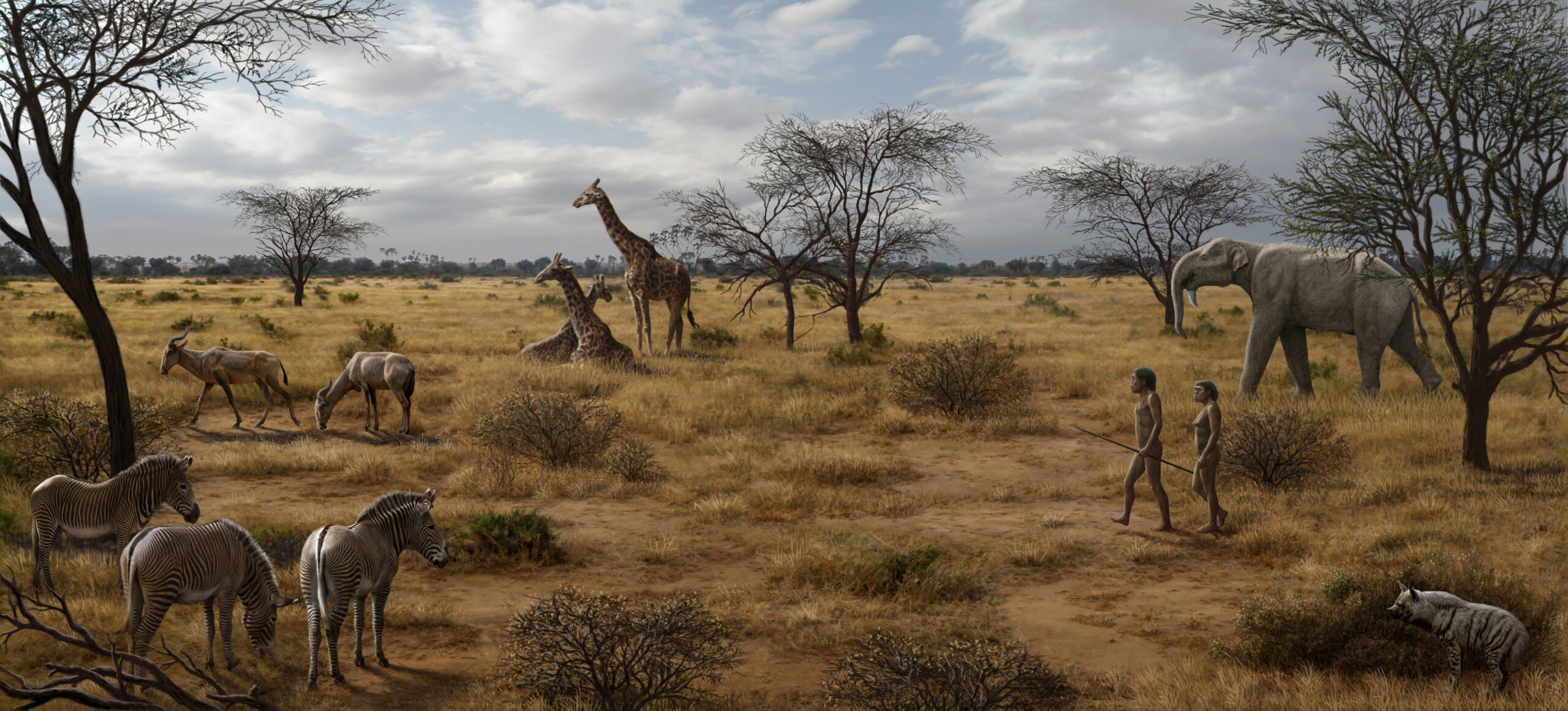
Many people have a linear understanding of human evolution, from a chimp-like ancestor deep in the forest to an upright walking, large-brained technological human in a grassland, with steady increases in brain-size and technological complexity connecting the two ends of this progressive spectrum. While this linear view of human evolution remains influential, discoveries in the last 20 years complicate the traditional view. Today, our understanding of the origins and environmental context of human traits such as large brains, tool-use and upright walking is significantly more complex and less linear than it was 20 years ago.
This lecture will review recent discoveries in early human evolution that challenge the traditional view, emphasizing the important role of ongoing fieldwork in the evolving understanding of human origins. It will also highlight how spatial sampling bias impacts our understanding of human evolution, and emphasize the critical future role of exploration outside of traditional fossil hotspots for filling in gaps in our understanding of human evolution.
Selected Reading & Media References
Barr, W. A., and B. Wood. “Spatial sampling bias influences our understanding of early hominin evolution in eastern Africa.” Nature Ecology & Evolution 8, no. 11 (2024): 2113–2120. https://doi.org/10.1038/s41559-024-02522-5
Barr, W. A., B. Pobiner, J. Rowan, A. Du, and J. T. Faith. “No sustained increase in zooarchaeological evidence for carnivory after the appearance of Homo erectus.” Proceedings of the National Academy of Sciences 119, no. 5 (2022): e2115540119. https://doi.org/10.1073/pnas.2115540119
Negash, E. W., Z. Alemseged, W. A. Barr, et al. “Modern African ecosystems as landscape-scale analogues for reconstructing woody cover and early hominin environments.” Journal of Human Evolution 197 (2024): 103604. https://doi.org/10.1016/j.jhevol.2024.103604
About the Speaker
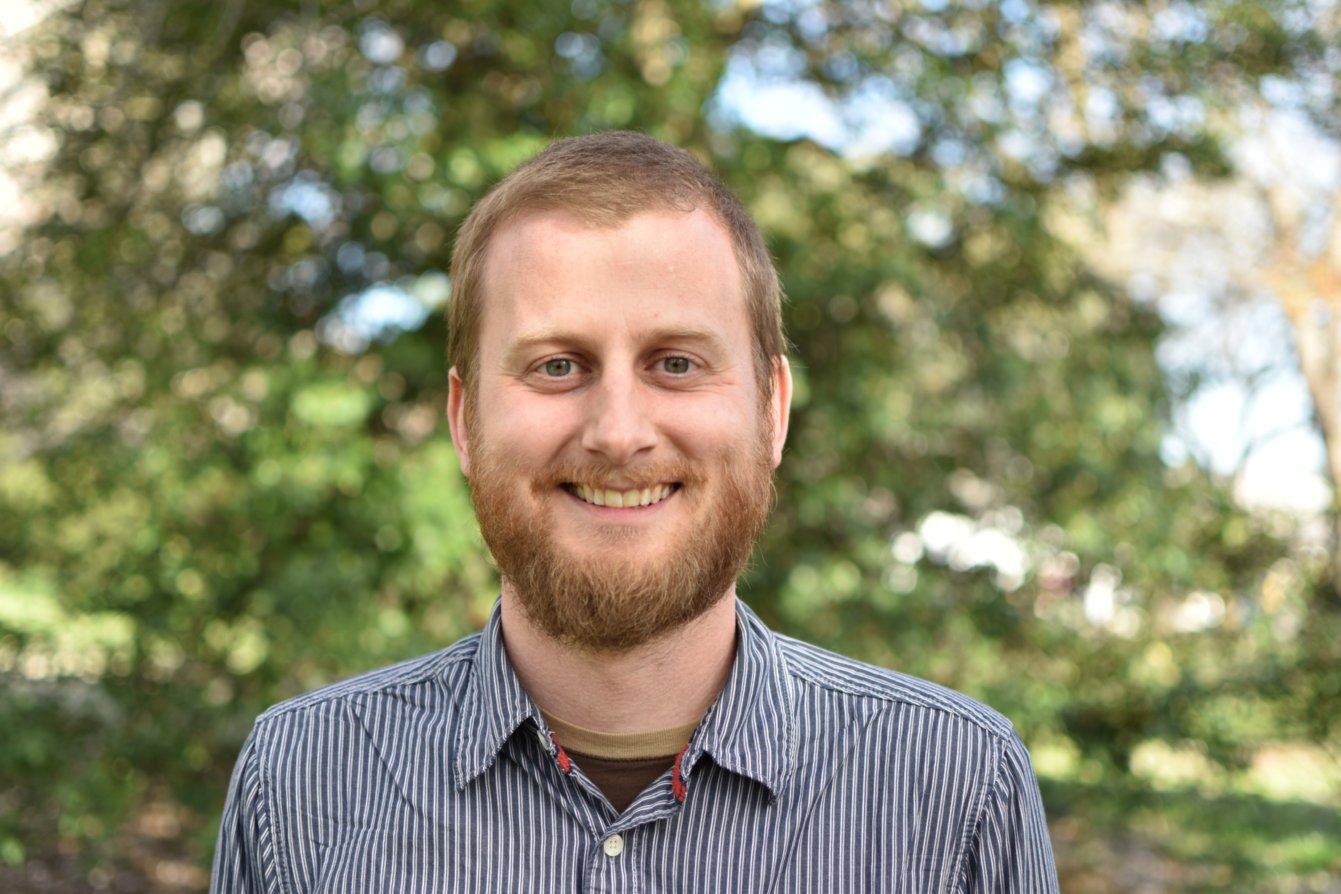
W. Andrew Barr is Associate Professor of Anthropology and a core faculty member of the Center for the Advanced Study of Human Paleobiology at The George Washington University. He previously served as Assistant Professor and Visiting Assistant Professor of Anthropology at George Washington University and as a Research Associate in the Department of Paleobiology at the Smithsonian National Museum of Natural History.
His research focuses on the environmental and ecological context of early human evolution, particularly the relationships among changing climates, habitats, animal communities, and evolutionary events in the human lineage. He uses fossil mammals, three-dimensional morphometric analysis, and statistical methods to reconstruct ancient environments and examine geographic sampling biases in the early hominin fossil record, combining paleontological fieldwork, quantitative methods, and ecological functional morphology to further understand human evolution.
He directs the Tumbili Paleoanthropology Project in Laikipia, Kenya, investigating Late Miocene fossil deposits outside the Great Rift Valley, and he conducts field research in the Mille-Logya region of Ethiopia and at Koobi Fora, Kenya.
He is an author on numerous anthropological publications and book chapters.
Among other honors and awards, he received a Smithsonian National Museum of Natural History Science Achievement Award, an American Association of Physical Anthropologists Professional Development Award, and a National Science Foundation Graduate Research Fellowship.
He earned a BS in Anthropology and French at Tulane University and an MA and a PhD in Anthropology at the University of Texas at Austin.
Speaker CV
https://wabarr.com/assets/CV/WAB_CV.pdf
Speaker Webpages and Social Media
https://anthropology.columbian.gwu.edu/w-andrew-barr
https://wabarr.com/
Bluesky: @wabarr.bsky.social