Mitochondria and Their Roles in Health and Disease
Douglas Wallace
Director, Center for Mitochondrial and Epigenomic Medicine (CMEM)
Children's Hospital of Philadelphia
Professor, Department of Pediatrics, Division of Genetic and Genomic Medicine
University of Pennsylvania
Sponsored by PSW Science Members Larry Millstein & Robin Taylor
About the Lecture
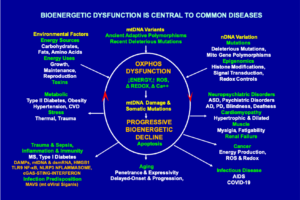
Why has Western Medicine failed to understand and prevent the common diseases: neuropsychiatric disorders (depression, autism, schizophrenia), metabolic diseases (diabetes, obesity, cardiovascular disease), neurodegenerative diseases (Alzheimer and Parkinson Disease), cancer, aging?
This lecture will argue that this is due to Kuhnian paradigm crisis. Western Medicine is conceptually based on the anatomical classification of disease (headaches are due to brain problems) and chromosomal genetics (nuclear DNA (nDNA) inherited by the “Laws of Mendel”. Yet to be alive requires energy (vital force), which is systemic and with different organs having different energy requirements (the brain is 2% of body weight but uses 20% of the body’s energy). Moreover, the critical energy genes are located in the maternally inherited mitochondrial DNA (mtDNA) within the cytosolic mitochondria, the power houses of the cell. Therefore, the formula for life becomes: Life = structure (anatomy) + energy (vital force) + information for anatomy and energy.
By not considering mitochondrial energetics and genetics, Western Medicine has overlooked half of the formula for human health, thus failing to understand the causes or to develop cures for common diseases.
To address this glaring deficiency, the lecture will discuss the symbiotic origin of the mitochondrion and its mechanism of energy production; the novel genetics of the mtDNA; using mtDNA variation to reconstruct the origin and ancient migrations of women; demonstrating the mitochondrial etiology of common diseases such as autism, Alzheimer diseases, Type II diabetes and cancer; reporting the importance of mitochondrial dysfunction in Long-COVID; and showing why many common diseases and aging have a delayed onset and progressive course.
Implications/future prospects: If we position energy in the middle of human health rather than anatomy, all of the common diseases, cancer, and aging can be seen as having the same underlying cause, chronic energy deficiency. Mitochondrial bioenergetics and genetics thus promise a whole new approach to sustaining health and treating disease, which includes diet and exercise. In fact, the mitochondrial bioenergetic paradigm of health and disease provides a direct link with traditional healing approaches such as the concept of “Qi” in Traditional Chinese Medicine.
Selected Reading & Media References
Wallace DC. Mitochondrial genetic medicine. Nat Genet. 2018 Dec;50(12):1642-1649. doi: 10.1038/s41588-018-0264-z. Epub 2018 Oct 29. Review. PMID: 30374071
Wallace DC: Mitochondrial DNA Variation in Human Radiation and Disease. Cell 163(1):33-38, Sep 2015 Notes: PMID: 26406369.
Xie W, Murdock DG, Wallace DC. Mitochondria and Qi: Merging eastern and western medicine. Pharmacol Res. 2026 May 12;229:108243. doi: 10.1016/j.phrs.2026.108243. Online ahead of print. PMID: 42119800
About the Speaker

Douglas C Wallace is Professor of Pediatrics in the Division of Human Genetics at the University of Pennsylvania and Director of the Center for Mitochondrial and Epigenomic Medicine at the Children’s Hospital of Philadelphia Research Institute. He also holds the Michael and Charles Barnett Endowed Chair in Pediatric Mitochondrial Medicine and Metabolic Diseases. Previously he was a Professor at the University of California, Irvine where he founded the Center for Molecular and Mitochondrial Medicine and Genetics; and he had faculty appointments at Emory University and at Stanford University.
Doug founded the field of Mitochondrial Medical Genetics. He defined the rules of human mtDNA genetics including demonstrating the maternal inheritance of the human mtDNA. He discovered the first inherited mtDNA diseases; used the accumulation of mtDNA mutations along radiating maternal lineages to reconstruct the origin and ancient migration of women; demonstrated that the accumulation of mtDNA mutations in tissues constitutes an aging clock; linked mitochondrial genetic variation to a wide range of metabolic, degenerative and neuropsychiatric disorders, and showed that mtDNA variation and mitochondrial dysfunction are critical in infectious disease and cancer. He also was the first to discover that mitochondria communicate with each other. Currently he is using mouse models of mitochondrial disease to develop metabolic and genetic therapies for both rare and common diseases with a mitochondrial etiology, and he is investigating potential quantum biology of mitochondrial oxidative phosphorylation.
Doug is an author on more than 500 scholarly publications.
Among other honors and awards, he is a member of the National Academy of Sciences, the National Institute of Medicine and the American Academy of Arts and Sciences. He received the William Allan Award from the American Society of Human Genetics, the Passano Award for mitochondrial genetics, the Gruber Genetics Prize, the American College of Physicians Award for Outstanding Work in Science as Related to Medicine, the Benjamin Franklin Medal for the Life Science, the Janssen Award for Biomedical Research, and Beering Award from Indiana University. He is also the recipient of aa honorary degree in Medicine and Surgery from the University of Padua.
Doug earned a BS in Genetics and Developmental Biology at Cornell University, an MPhil in Microbiology and Human Genetics and a PhD in
Microbiology and Human Genetics at Yale University, and an MD in Mitochondrial Medicine at the University of Padua.
Minutes
On June 26, 2026, Members of the Society and guests joined the speaker for a reception and dinner at 5:45 PM in the Members’ Dining Room at the Cosmos Club. Thereafter they joined other attendees in the Powell Auditorium for the lecture proceedings. In the Powell Auditorium of the Cosmos Club in Washington, D.C., President Larry Millstein called the lecture portion of the 2,538th meeting of the Society to order at 8:02 p.m. ET. He began by welcoming attendees, thanking sponsors for their support, announcing new members, and inviting guests to join the society. Scott Mathews then read the minutes of the previous meeting which included the lecture by Earl Miller, titled “Thought Emerges from Neural Dynamics”. The minutes were approved as read.
President Millstein then introduced the speaker for the evening, Douglas Wallace, of the Children’s Hospital of Philadelphia and the University of Pennsylvania. His lecture was titled “Mitochondria and Their Roles in Health and Disease”.
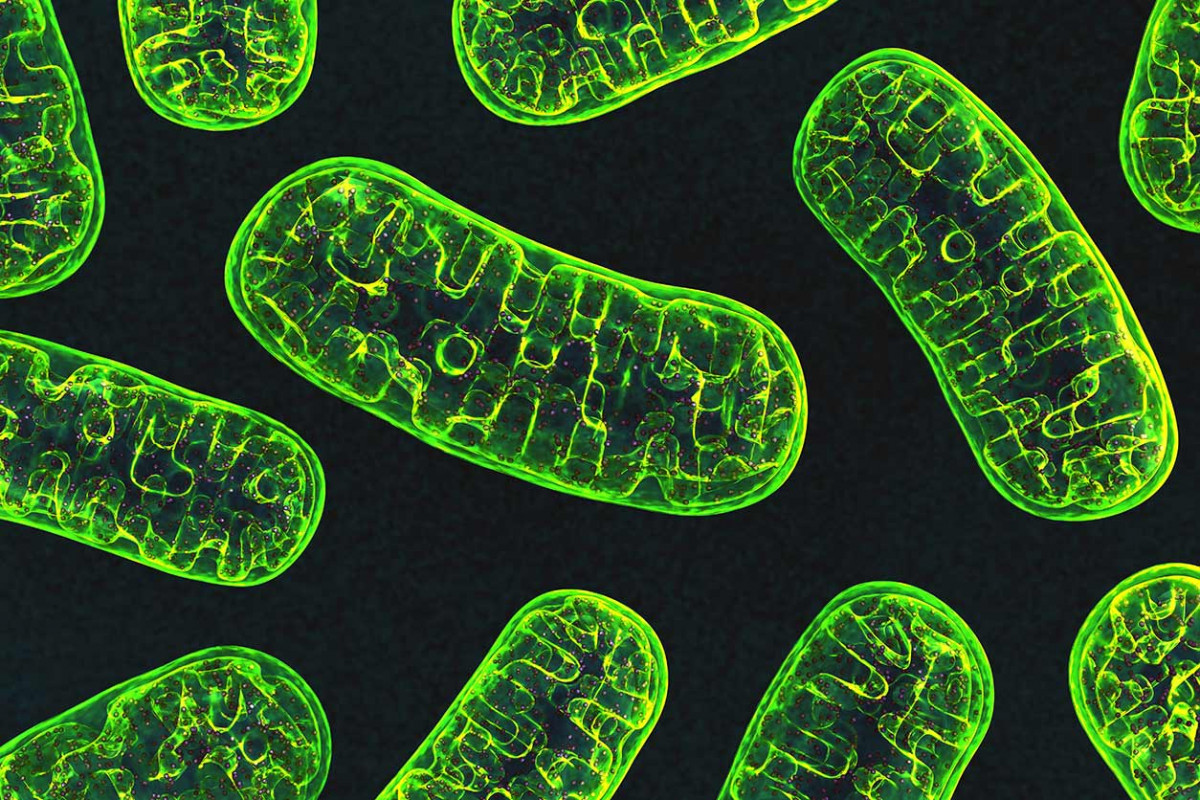
The speaker began by saying that the primary focus of current medicine was anatomy, and therefore the structure of mass. He said that mass without energy is inert. While the mass of a body (its anatomy) is of course important, the energy that animates the mass is at least as important. Wallace explained the central role of mitochondria as the powerhouse of the cell, responsible for generating approximately 90% of the body's energy in the form of ATP. He discussed the fact that mitochondria are a bacterium, incorporated into cells about 2.5 billion years ago. Wallace described the biochemistry of mitochondria, combining fats, sugars, and oxygen to create the energy that cells use. He detailed the structure of mitochondria, including their inner and outer membranes and the mitochondrial DNA (or mtDNA), which is inherited exclusively from the mother. He discussed how maternal inheritance of mtDNA allows the mapping of human origins and migration patterns.
Wallace elaborated on the concept of "Mitochondrial Medicine," a field he pioneered. He explained that because organs with high energy demands—such as the brain, heart, muscle, and kidneys—are particularly vulnerable to defects in mitochondrial function, mutations in mtDNA can lead to a wide array of debilitating and often age-related diseases. He linked mitochondrial dysfunction to common diseases including heart disease, diabetes, neurodegenerative disorders like Alzheimer's and Parkinson's disease, and even cancer.
The speaker discussed how the accumulation of mutations in mtDNA over a person's lifetime contributes to the aging process. He presented evidence showing that a decline in mitochondrial energy output is a key factor in age-related degenerative decline. He presented details concerning several changes in mtDNA which have been associated with specific disease conditions. He argued that both the mutations and the adaptations of mtDNA have implications for predisposition and resistance to certain diseases. The speaker then discussed the specific role of mitochondria in SARS-COVID-2 and “long COVID”, showing that mitochondrial therapy mitigated COVID pathology in mice.
Wallace concluded his lecture by emphasizing the potential for therapies that target mitochondrial function. He suggested that by understanding the bioenergetic basis of disease, it may be possible to develop novel treatments and preventative strategies for a multitude of common and devastating health conditions.
The lecture was followed by a Question and Answer session.
A member asked about how lifestyle and diet affect the mitochondria, particularly with respect to aging and longevity. Wallace responded that an excess of calories would produce an epigenetic imprint that would be very important in diabetes and obesity. He said that animal models have clearly shown that a significant reduction in caloric intake extends lifespan.
A member asked a two-part question: first, to what extent do electromagnetic interactions affect mitochondrial function, and second, do mitochondria explain the observation that women, on average, tend to live longer than men. Wallace responded that he believed that estrogen played an important role in protecting mitochondria and mtDNA, particularly with respect to a woman’s menstrual cycle. He then discussed the fact that mitochondria use untethered electrons and protons in generating energy, and that these particles are clearly affected by magnetic fields. He described work that demonstrated changes in mitochondrial respiration due to changes in magnetic field. He discussed the possibility that mitochondria, having evolved in Earth’s magnetic field, may be well-optimized for energy production in that magnetic field.
A guest asked why it was that some people have severe COVID symptoms, while others can be completely asymptomatic. Wallace responded that recent results indicate that different mitochondrial “lineages”, or haplogroups, respond differently to the COVID virus, and that this could potentially account for the broad spectrum of responses to COVID.
After the question and answer period, President Millstein thanked the speaker and presented him with a PSW rosette, a signed copy of the announcement of his talk, and a signed copy of Volume 17 of the PSW Bulletin. He then announced speakers of up-coming lectures and made a number of housekeeping announcements. He adjourned the 2,538th meeting of the society at 10:02 pm ET.
Temperature in Washington, DC: 24.4° Celsius
Weather: Cloudy
Dinner attendance: 44
Lecture attendance:
In person: 83
Live Stream: 42
For a total of 125 viewers
Views of the video in the first two weeks: 603
Respectfully submitted, Scott Mathews: Recording Secretary