SPECIAL THURSDAY MEETING!
Thought Emerges from Neural Dynamics
How Science is Unraveling the Nature of Cognition and Consciousness
Earl Miller
Picower Professor of Neuroscience
The Picower Institute for Learning and Memory and Department of Brain and Cognitive Sciences
Massachusetts Institute of Technology
Sponsored by PSW Science Member Tim Thomas
About the Lecture
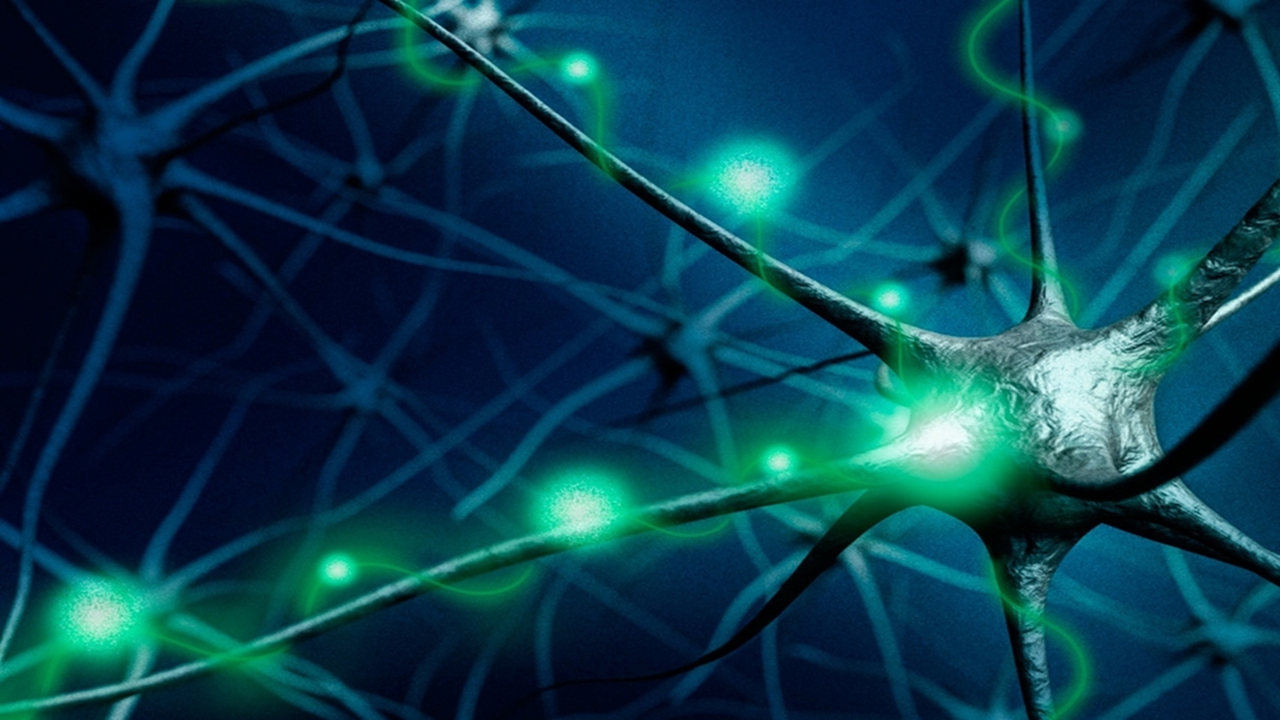
Classic models likened brain function to networks of neurons, analogous to telegraph systems. Emerging evidence, however, suggests that higher cognition relies not only on synaptic connections but also on rhythmic oscillations. These “brain waves” are electric field dynamics that travel across the cortex and shape neuronal spiking. This view expands the brain’s functional repertoire: the “telegraph wires” of synaptic circuits also generate “radio waves” (electric fields) that rapidly distribute influence across large distances. Such fields may support large-scale coordination underlying executive control and consciousness. They may even enable energy-efficient analog computation, which may explain why our brains run on the power of a dim lightbulb about 20 watts (incandescent).
Selected Reading & Media References
Analog Cognition and Consciousness, Earl K. Miller, Scott L. Brincat, Jefferson Roy, https://osf.io/preprints/psyarxiv/z48x7_v2
Miller, E.K., Brincat, S.L. and Roy, J.E. (2024): Cognition is an emergent property. Current Opinion in Behavioral Sciences: https://doi.org/10.1016/j.cobeha.2024.101388.
Miller, E.K., Lundqvist, L. and Bastos, A.M. (2018): Working Memory 2.0. Neuron: DOI:https://doi.org/10.1016/j.neuron.2018.09.023
About the Speaker
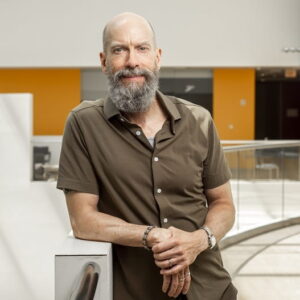
Earl K Miller is the Picower Professor of Neuroscience in The Picower Institute for Learning and Memory and the Department of Brain and Cognitive Sciences at the Massachusetts Institute of Technology (MIT). He is also co-founder and Chief Scientist of SplitSage and co-founder of Neuroblox. Previously he was Associate Director of The Picower Institute for Learning and Memory and Director of Graduate Studies in Brain and Cognitive Sciences at MIT.
Earl’s research centers on the neural mechanisms of cognition. His laboratory uses multiple-electrode neurophysiology, psychophysics, pharmacological manipulations, and computational approaches to study how neural activity and network dynamics support cognition. Much of his work concerns the prefrontal cortex and its role in integrating information, representing rules, controlling attention, and sup-porting flexible behavior.
Earl is known for showing how neurons in the prefrontal cortex represent learned associations, task rules, categories, and other abstract information, and for the contributions of his group to understanding mixed selectivity in cortical neurons, the role of oscillations in working memory and attention, and the effects of anesthetics, such as propofol, on cortical dynamics and consciousness.
Earl is an author on more than 200 scholarly publications, and “An Integrative Theory of Prefrontal Cortex Function” co-authored with Johnathan Cohen is one of the most-cited papers in the neurosciences.
Among other honors and awards, Earl is a member of the American Academy of Arts and Sciences and a Fellow of the American Association for the Advancement of Science. He is the recipient of an honorary doctorate from Kent State University, the George A Miller Prize in Cognitive Neuroscience, the Paul and Lilah Newton Brain Science Award, and the Goldman-Rakic Prize for Outstanding Achievement in Cognitive Neuroscience.
Earl earned a BA in Psychology at Kent State University, and an MA and PhD in Psychology and Neuroscience at Princeton University.
Social Media
Webpages: https://ekmillerlab.mit.edu and https://ekmillerlab.mit.edu/earl-miller/
LinkedIn: https://www.linkedin.com/in/earlkmiller/
X (Twitter) handle(s): @MillerLabMIT
YouTube Channel(s): www.youtube.com/@MillerLabMIT
BlueSky: @earlkmiller.bsky.social
Minutes
On June 11, 2026, Members of the Society and guests joined the speaker for a reception and dinner at 5:45 PM in the Members’ Dining Room at the Cosmos Club. Thereafter they joined other attendees in the Powell Auditorium for the lecture proceedings. In the Powell Auditorium of the Cosmos Club in Washington, D.C., President Larry Millstein called the lecture portion of the 2,537th meeting of the Society to order at 8:02 p.m. ET. He began by welcoming attendees, thanking sponsors for their support, announcing new members, and inviting guests to join the society. Scott Mathews then read the minutes of the previous meeting which included the lecture by Michael Garrett and Adam Thompson, titled “Agentic AI and the Search for Extraterrestrial Life”. The minutes were approved as read.
President Millstein then introduced the speaker for the evening, Earl Miller, of the Massachusetts Institute of Technology. His lecture was titled “Thought Emerges from Neural Dynamics”.
The speaker began by presenting the classical neuroscientific model that likens brain function to a complex "telegraph system". He introduced “the stuff of thought”; neurons, interconnected by synapses, creating electrical impulses (or spikes), which propagate on axons to reach other neurons. Miller said that by the 1950’s, researchers developed the technology to measure the electrical spiking of individual neurons. He said that by the early 1960’s, it was recognized that neurons are “little information processing units”. The speaker said that the firing of an individual neuron in the visual cortex was associated with a specific visual feature, such as: edge detection, line segment orientation, or the detection of a specific color.
Miller used the term “Connectionism”, to describe the “bottom-up”, sensorimotor framework of the classic 20th Century model of the brain. He described how he and other researchers in the field began to study “top-down” brain function, using new sensors that could measure the activity of 100’s or even 1,000’s of neurons simultaneously. The speaker said that top-down information was distributed over many cortical neurons, not just a few specialized neurons. He said that prefrontal neurons associated with decision making and “rule learning” were largely insensitive to bottom-up sensory details. As a result, Miller argued that the sensorimotor model is insufficient to explain the rapid, flexible coordination required for executive control and conscious thought.
The speaker described experiments which indicated that many neurons, particularly in the prefrontal cortex were “multifunctional”. Not only were the neurons not specialized, but they played different roles in different situations. He said that individual neurons were capable of multiplexing information. He said that mixed selectivity, multifunctional neurons create a non-linear, high dimensional, state space that supports more complex computations, thereby boosting the brain’s horsepower. Additionally, Miller claimed that distributing memory across many multifunctional neurons, rather than a few specialized neurons, dramatically increases storage capacity.
The speaker then discussed brain waves: rhythmic fluctuations of electric fields in close proximity to the brain. Such fluctuations can be measured by electroencephalogram (or EEG). Miller said that the role of brain waves was largely ignored in the second half of the 20th Century, because researchers had shifted their attention to the behavior of single neurons. He said that during this period, brain waves were widely considered to be epiphenomenal (a secondary byproduct or accidental consequence). Miller said that particular frequencies of brain waves were associated with different levels of cognition and awareness.
The speaker discussed the interplay between brain waves and neuron spiking: the spiking of neurons creates the electrical wave, which propagates through the cortex, effecting when and where neurons spike. He showed graphs which indicated that the spiking of neurons increased in regions where the amplitude of the brain waves was highest. He discussed the fact that general anesthesia caused phase shifts in the brain waves, leading to unconsciousness. Miller said that three different anesthetics have been shown to produce the same types of changes in brain waves. The speaker said that he and his colleagues are investigating “closed loop” delivery of anesthesia, by measuring brain waves and titrating dosage in real time.
The speaker described how low frequency brain waves (alpha and beta waves) filter sensory inputs, similar to the way a stencil “filters spray paint”. He claimed that waves are a natural way to produce complex patterns of spiking. He said “Thoughts are organized so spiking must be organized.” Miller said that electrical wave signals propagate through the brain about 5,000 times faster than spikes. He claimed that the combination of brain waves and spiking neurons constituted a 3-dimensional, analog computer, which is vastly more energy efficient than digital computers.
Miller ended his talk by saying that while brains use “connectionism” of neurons to store information, the computations, and therefore cognition and consciousness, result from brain waves.
The lecture was followed by a Question and Answer session.
A member asked about fast recognition processes in the brain; processes that are too fast for feedback mechanisms. He asked if these processes were purely analog, resulting from brain waves and not requiring the slower propagation of spikes. Miller responded by making the distinction between a “reflex reaction” and “cognition or consciousness”, saying that the brain has different mechanisms. The member asked about visual recognition, saying that it appears to require computation, and asking if that computation was purely analog, purely digital, or some combination of the two. Miller responded that while spiking neurons were not strictly digital, the “feed-forward” effect of spikes could allow for very fast recognition, with minimal intervention from brain waves.
A guest asked if these ideas about how the brain works were applicable to AI, and if so, did Miller expect to see more human-like intelligence or consciousness emerging in AI. Miller responded that intelligence and consciousness are “difficult to nail down”. He said that AI is supposed to be “brain-inspired”, but it is only using connectionism and not the emergent complexity associated with brain waves. He described recent efforts to include analog computation in electronic circuits to reduce power.
A member on the live stream said that cognition in humans seems to require an “inner narrative”, and asked if that implied that cognition depends on the capacity for verbal language. Miller responded that while language was extremely important, a lot of thinking goes on without language. He said that cognition is enhance by language, but does not necessarily require it.
After the question and answer period, President Millstein thanked the speaker and presented him with a PSW rosette, a signed copies of the announcement of his talk, and a signed copy of Volume 17 of the PSW Bulletin. He then announced speakers of up-coming lectures and made a number of housekeeping announcements. He adjourned the 2,537th meeting of the society at 10:05 pm ET.
Temperature in Washington, DC: 22.8° Celsius
Weather: Light Rain
Dinner attendance: 34
Lecture attendance:
In person: 93
Live Stream: 45
For a total of 138 viewers
Views of the video in the first two weeks: 568
Respectfully submitted,
Scott Mathews: Recording Secretary